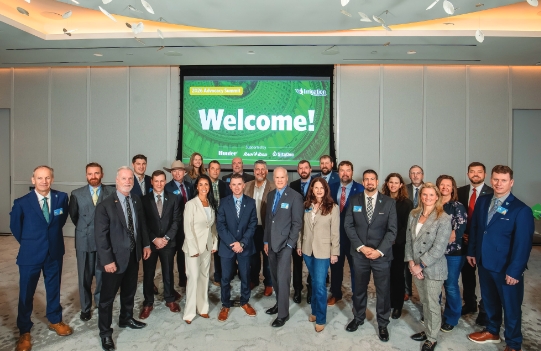
Each spring, the Irrigation Association convenes leaders from across the agricultural and landscape irrigation sectors in Washington, D.C., to engage directly with policymakers and federal agency staff on the issues shaping the industry’s future. The 2026 IA Advocacy Summit continued that tradition, bringing IA members together for two days of briefings, Capitol Hill meetings and agency discussions focused on advancing practical, science-based water and irrigation policy.
Held March 10–12 in Washington, the Advocacy Summit provided participants with a coordinated platform to share real-world perspectives from the field while reinforcing the irrigation industry’s role in water stewardship, food security and resilient communities.
“This year’s Advocacy Summit was a strong reminder of how impactful it is when the irrigation industry speaks with a unified, informed voice,” says Andrew Morris, IA director of policy and technical affairs. “Bringing real-world experience directly to policymakers helps ensure that irrigation remains part of the solution in conversations around water efficiency, resilience and sustainability.”
This year’s Advocacy Summit focused on issues that are top of mind for Congress and federal agencies, while reflecting the distinct priorities of landscape and agricultural irrigation professionals.
For agricultural irrigation, discussions centered on the upcoming 2026 Farm Bill, with emphasis on the following priorities:
Landscape irrigation priorities emphasized sustaining EPA WaterSense while advancing federally supported water efficiency, infrastructure and reuse programs. These efforts focus on helping communities manage outdoor water demand, improve system performance and strengthen resilience in the face of increasing drought and water supply challenges.
Across both sectors, the IA reinforced the importance of policies that deliver measurable water savings while remaining practical to implement in real-world conditions.
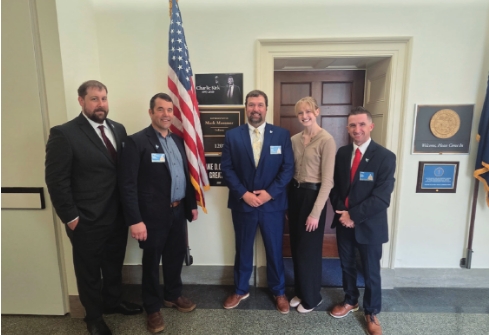
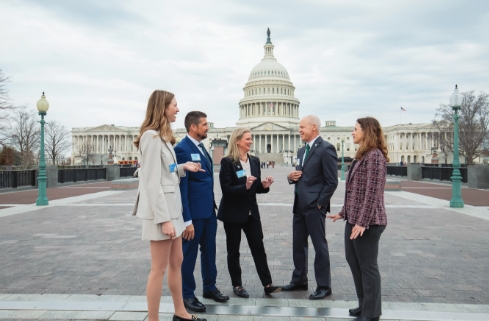
During the summit, IA members met with 27 congressional offices from across the country, representing a broad mix of committees and jurisdictions. These meetings allowed participants to highlight how federal policies translate into on-the-ground outcomes for contractors, manufacturers, farmers and communities.
“This is one of the few opportunities for Congress to hear directly from a national association focused specifically on irrigation,” says Morris. “Other organizations may touch on irrigation as part of a broader agenda, but the Advocacy Summit gives our members time to share deeper technical insight on the issues affecting our industry. That helps ensure irrigation expertise is part of the policy conversation.”
Following the event, one attendee reflects, “It’s easy to assume someone else is advocating for our industry and fully understands the nuance and technical skill behind the work we do every day. One of my biggest takeaways from the Advocacy Summit was realizing that my perspective adds value to the conversation. Participating in these discussions helps build connections and insights that will influence how I approach my work going forward.”
The annual Advocacy Summit remains a cornerstone of the IA’s advocacy efforts, reinforcing its role as a credible, solutions-oriented voice for the irrigation industry. Insights gained during the Advocacy Summit will continue to inform the association’s engagement with Congress and federal agencies throughout the year.
Looking ahead, the IA will build on these conversations as appropriations decisions take shape and federal water efficiency and reuse initiatives evolve. Just as importantly, the summit continues to empower members to stay engaged, encouraging them to maintain relationships with policymakers, share their expertise and advocate for policies that support efficient irrigation, resilient water systems and a sustainable future for agriculture and landscapes alike.
As part of the Advocacy Summit, the IA also met with leadership from the U.S. Department of Agriculture’s Natural Resources Conservation Service and formally signed a Memorandum of Understanding during a dedicated agency session on March 12. The MOU establishes the IA as a recommending and certifying body for certain irrigation-related TSP opportunities, creating a more streamlined pathway for qualified IA-certified agricultural irrigation professionals to become NRCS-certified TSPs for specified conservation practices. This agreement is designed to strengthen conservation delivery capacity by expanding access to qualified irrigation expertise, helping producers move conservation projects more efficiently from planning to implementation while supporting NRCS field staff facing growing demand for technical assistance.
Registration and housing are open for the 2026 Irrigation Show and Education Week, Dec. 7–10 in Las Vegas. Exhibitors and attendees can go online to register and book housing. Show registration gives you access to the exhibit floor, select industry education opportunities, and other social and networking events.
Don’t miss this opportunity to see the cutting-edge technology, experience best-in-class education and connect with peers in your industry. Visit irrigationshow.org for more information.