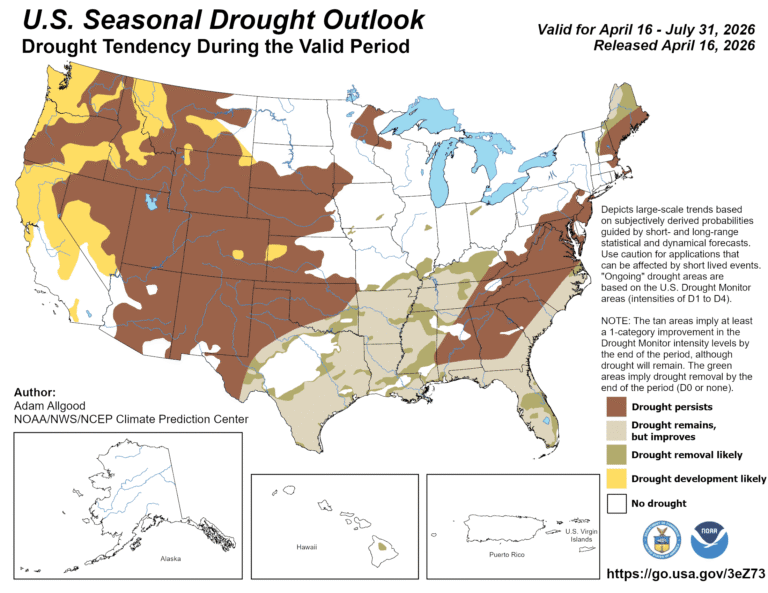
Since late-autumn 2022, portions of the United States have been engulfed by episodic stormy weather. According to the National Centers for Environmental Information, the contiguous U.S. experienced its 17th-warmest, 21st-wettest winter during the 128-year period of record. With much of the extreme winter wetness concentrated in a belt from California into the upper Great Lakes region, there were some notable reductions in drought coverage.
According to the U.S. Drought Monitor, national drought coverage declined from 63% to 38% between Oct. 25, 2022, and Feb. 28, 2023. At the end of February, less than half of California was covered by drought for the first time since July 2020, with most of the remaining impacts related to lingering groundwater shortages. California’s impressive drought relief came in several quick bursts, leading to unwelcomed complications such as historic snow accumulations, as well as locally severe flooding and debris flows. Even before snowpack begins to melt, many of California’s reservoirs have returned to near- or above-normal levels.
There is less optimism for the interior West’s large reservoirs, such as Lake Powell and Lake Mead, which remain at critically low levels following more than two decades of drought. In addition, many of the big winter storms bypassed the Northwest, leaving several key watersheds with low reservoir levels and below-average soil moisture and snowpack.
Farther east, drought remains deeply entrenched across the southern half of the Great Plains, with profound impacts on rangeland, pasture and winter wheat conditions. According to the U.S. Department of Agriculture, the winter of 2022-23 ended with more than 40% of the winter wheat rated in very poor to poor condition in Kansas, Oklahoma and Texas. Looking ahead to the 2023 growing season, there are some uncertainties in the forecast due to the imminent demise of La Niña. Still, spring and early-summer weather highlights may include drought intensification in the Northwest, seasonably dry conditions in the Southwest, and wet weather in the eastern Corn Belt.
Brad Rippey is an agricultural meteorologist in the U.S. Department of Agriculture’s Office of the Chief Economist.