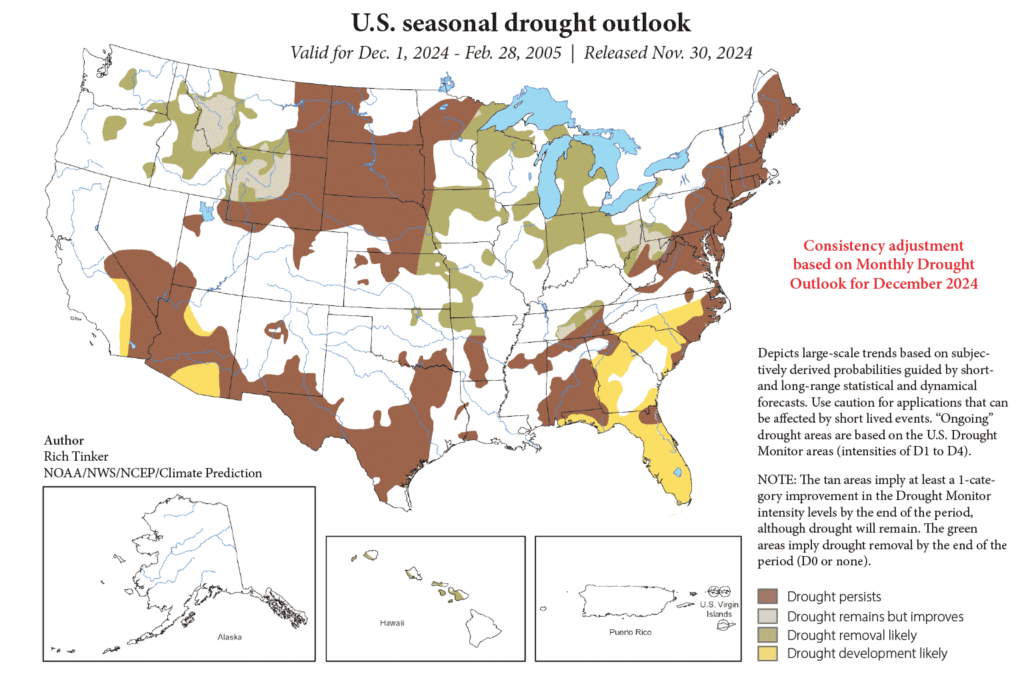
Following the nation’s warmest and 7th-driest September-October period during the last 130 years, wetness returned across much of the western and central United States during November. According to the U.S. Drought Monitor, drought coverage across the Lower 48 States reached a two-year high of 54.08% on Oct. 29, 2024, before improving more than 12 percentage points during November.
The breakdown of a stubborn area of atmospheric high pressure over eastern North America contributed to the wetter November pattern, leading to a boost in soil moisture and general improvement in the health of vegetation, including rangeland, pastures and winter wheat. The November wetness also alleviated navigation concerns in the midst of a third consecutive autumn with low water levels in the Mississippi River drainage basin. The Mississippi River at Memphis, Tennessee, climbed above its low-water threshold on Nov. 8 and rose more than 17 feet in the 10-day period ending Nov. 14.
Farther west, many high-elevation sites from the Cascades and Sierra Nevada to the Rockies have experienced a promising start to the 2024-25 winter wet season, with November storms delivering significant mountain snow. However, the late-autumn storminess bypassed a few areas, including much of Arizona and parts of the northern Rockies. Still, Western reservoir storage remains mostly favorable in the wake of recent wet winters, with California’s 154 primary intrastate reservoirs collectively storing 114% of the average water volume at the beginning of November.
However, chronic water shortages persist in larger, multistate watersheds such as the Rio Grande and the Colorado River. By early December, storage along the Rio Grande stood at just 26.5% of conservation pool at Amistad Reservoir and 12.6% at Falcon International Reservoir.