Sponsored by

Although a full-fledged La Niña has not materialized this winter, atmospheric gyrations across North America since late autumn are consistent with those typically observed during La Niña. This Niña-esque pattern has led to several interesting U.S. weather anomalies, including episodic cold outbreaks — harshest from the northern Plains into the East — and a stark contrast between Northwestern storminess and Southwestern warmth and dryness.
From a water-supply perspective, Southwestern winter drought could lead to subpar spring and summer runoff in key watersheds, including the Rio Grande and Colorado River basins. Along the Rio Grande, Amistad Reservoir was only 26.5% full as 2025 began, while Falcon Lake was less than 14% full. However, many smaller Western reservoirs remain in good shape, following the bounteous winter wet season of 2022–2023 and the mostly favorable 2023–2024 season.
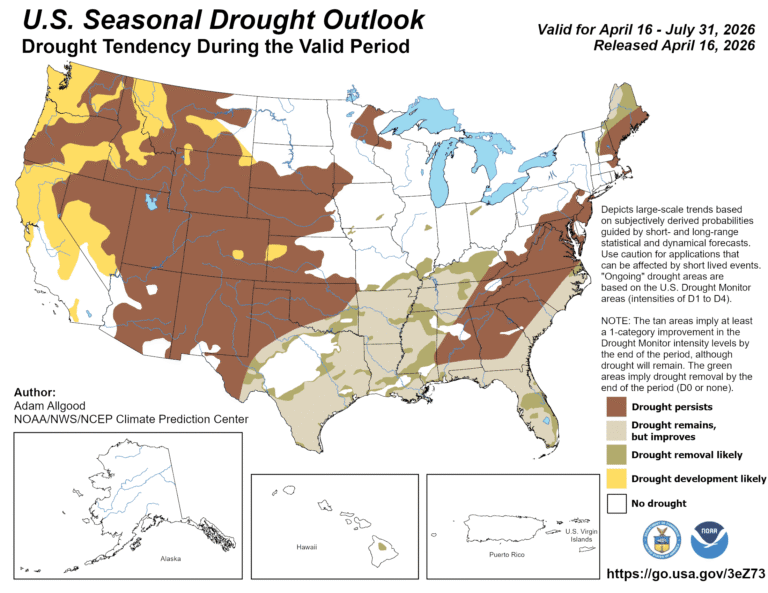
For the Lower 48 States as a whole, drought coverage — according to the U.S. Drought Monitor — fell to 38% at the end of 2024, down from a two-year high of 54% in late October. Late-year drought reduction or eradication was particularly dramatic in the Northwest and from the central and southern Plains into the Midwest, while worsening conditions were observed across portions of the northern Plains, Atlantic Coast states and an area stretching from southern California to the Rio Grande Valley.
Looking ahead to late winter and early spring, National Weather Service forecasts indicate the likelihood of ongoing wetness in the Northwest and persistent dryness across central and southern sections of the Rockies and Great Plains, as well as the Southwest. Early-year dryness may also plague the lower Southeast, including Florida. Meanwhile, unusually wet weather may prevail for the next few months from the mid-South into parts of the Midwest and Northeast, while periodic cold outbreaks are likely to last longest across portions of the northern U.S.