Sponsored by

With the demise of La Niña in early 2025, a wetter pattern has evolved across much of the continental United States. Drought coverage across the Lower 48 states, which rose as high as 54% last autumn, dipped below 30% this June, according to the U.S. Drought Monitor. However, recent rainfall has not been evenly distributed, with many areas west of the Rockies missing out.
Spring and summer dryness has been particularly acute in the Northwest, derailing some of the positive effects of a mostly favorable winter wet season. In some areas of the West, reservoir storage potential has been lost due to sublimation of snow or absorption of runoff by thirsty soils. Additionally, prematurely melted Western snowpack could lengthen the 2025 wildfire season by leaving the landscape exposed to more sunshine and drying potential. Meanwhile, Western statewide reservoir storage was mixed as summer began, ranging from less than two-thirds of historical average in New Mexico to more than 110% of average in California, Nevada and Oregon. Larger Southwestern watersheds such as the Rio Grande and the Colorado River continue to suffer from the effects of long-term drought, with the latter basin currently holding approximately 70% of its average water volume.
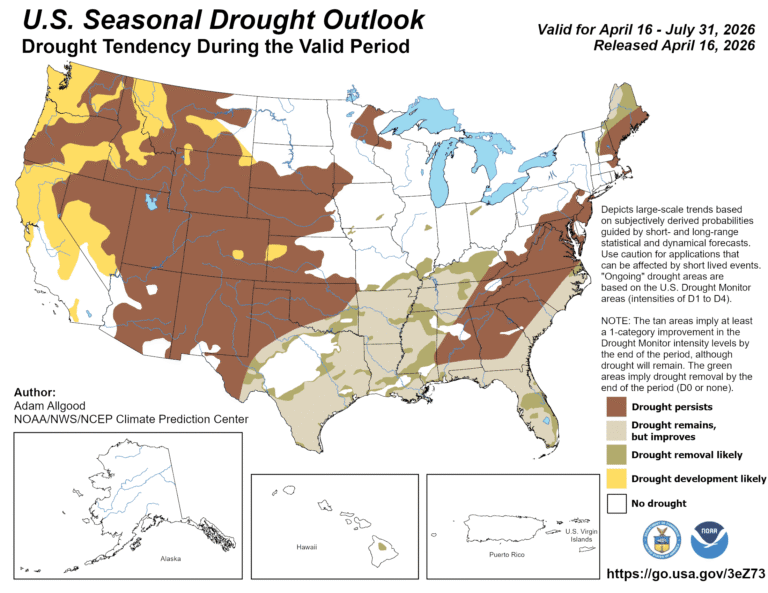
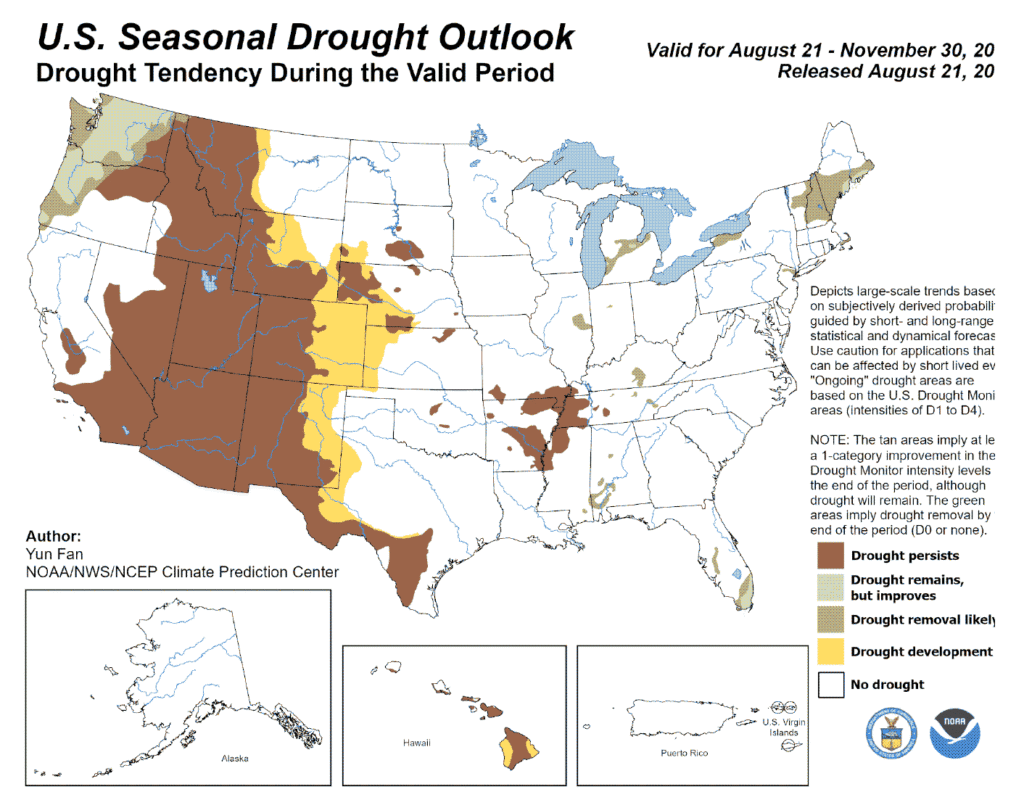
Looking ahead to the remainder of 2025, ongoing concerns regarding the development, persistence or intensification of Western drought should contrast with mostly drought-free conditions in the eastern half of the United States. Tropical activity could contribute to Southern and Eastern wetness, with 13 to 19 named storms and six to 10 hurricanes expected to form by the end of the 2025 Atlantic hurricane season.