Sponsored by

Sponsored by droughtmonitor.unl.edu
With much of the Western mountain snowpack already melted by mid-spring 2026, water-supply prospects are increasingly bleak, except in areas with sufficient reservoir storage or groundwater reserves to forestall widespread shortages. Additionally, the early snow loss could lengthen the Western wildfire season by exposing fire-prone hillsides to the drying effects of warmth, wind and sunshine.
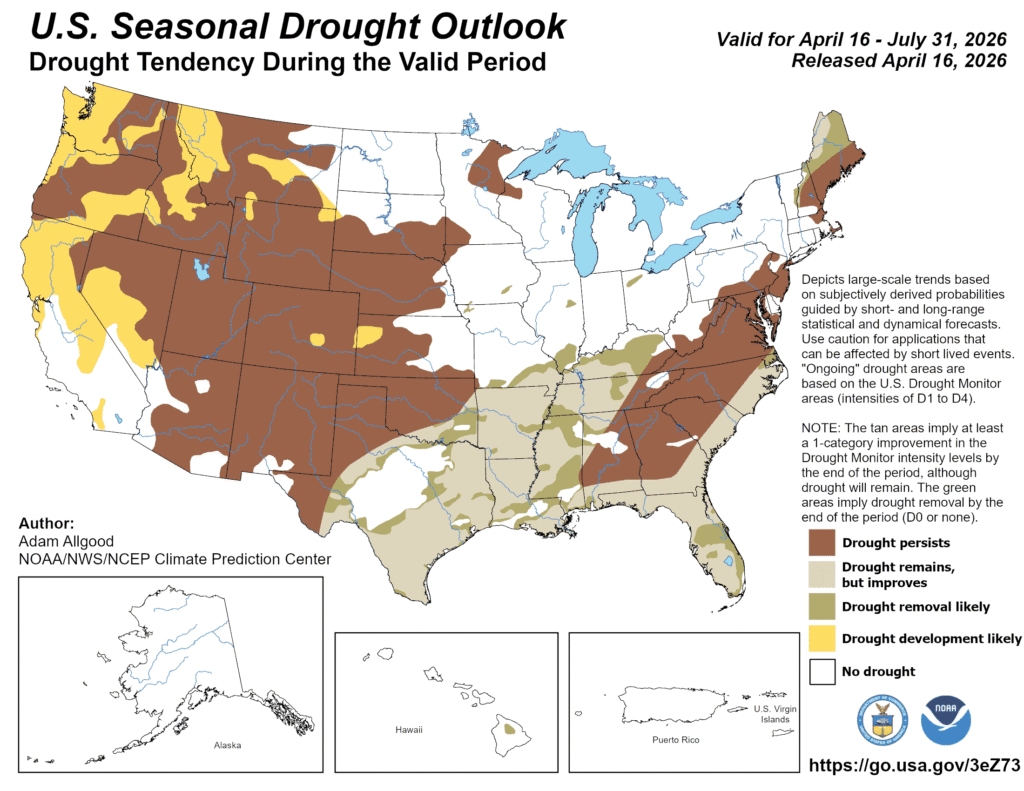
Farther east, rampant drought covers the Plains and the South, with adverse impact on surface-water supplies, rangeland, pastures, winter wheat and spring-sown crops. Across the Lower 48 states, on April 7, drought coverage topped 60% for the first time since Nov. 8, 2022, according to the U.S. Drought Monitor. Prior to 2026, there were only 30 weeks during the 21st century with U.S. drought coverage exceeding 60% — all in 2012, 2013 and 2022.
Looking ahead, El Niño is expected to return this summer for the first time since 2024. However, any North American-scale weather effects related to El Niño are not likely to develop until at least autumn. Smaller-scale events related to El Niño development that could appear earlier in the year include an active (rain-producing) monsoon circulation over the Southwest starting in July and a possible suppression of tropical activity in the Atlantic Basin during hurricane season.
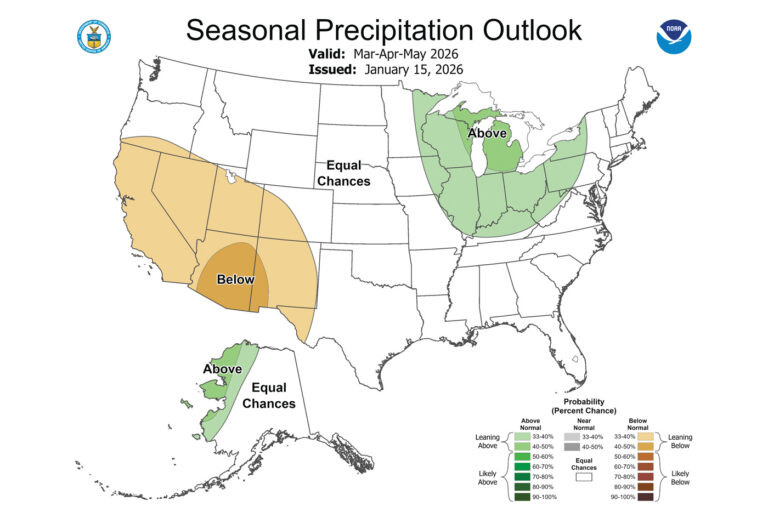
Elsewhere, U.S. summer highlights may include further drought development or intensification from the Pacific Coast to the High Plains, relatively cool weather and ample rainfall in much of the Midwest, and improving drought conditions in parts of the South, mainly across Florida and from the western Gulf Coast region to the Mississippi Delta.