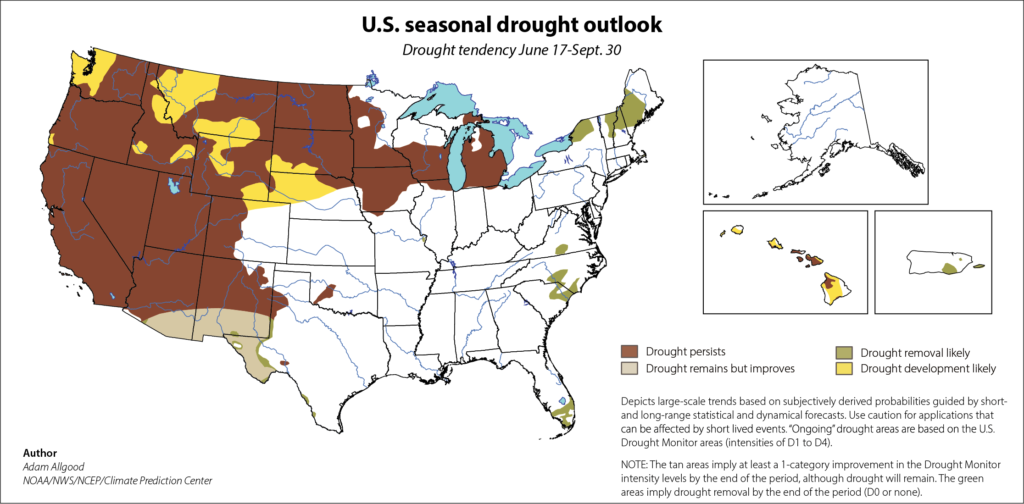
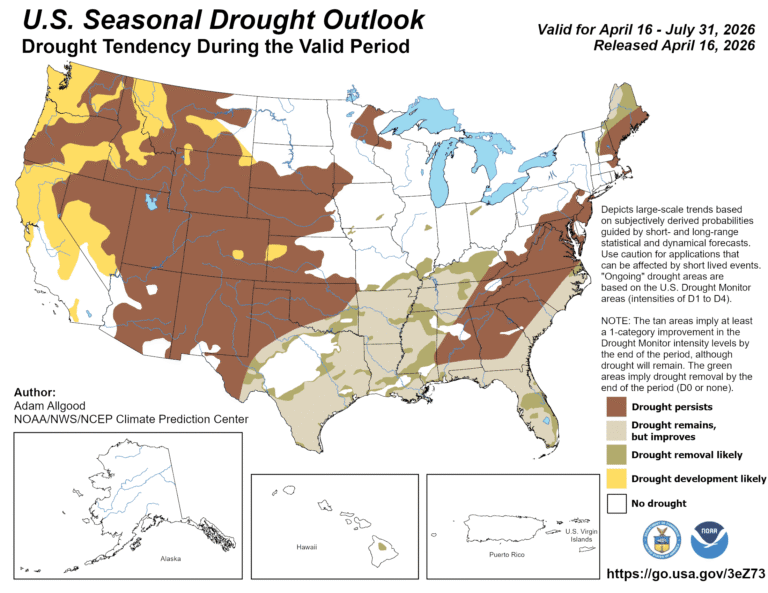
La Niña has ended, but drought is firmly established across the western half of the United States. By May 2021, drought covered nearly one-half of the lower 48 states, according to the U.S. Drought Monitor, and almost 90% of the 11-state Western region. Given the seasonality of precipitation across much of the West, meaningful drought relief may not occur until at least the autumn of 2021. As a result, drought is expected to persist or further intensify during the summer from the Pacific Coast to the Great Plains.
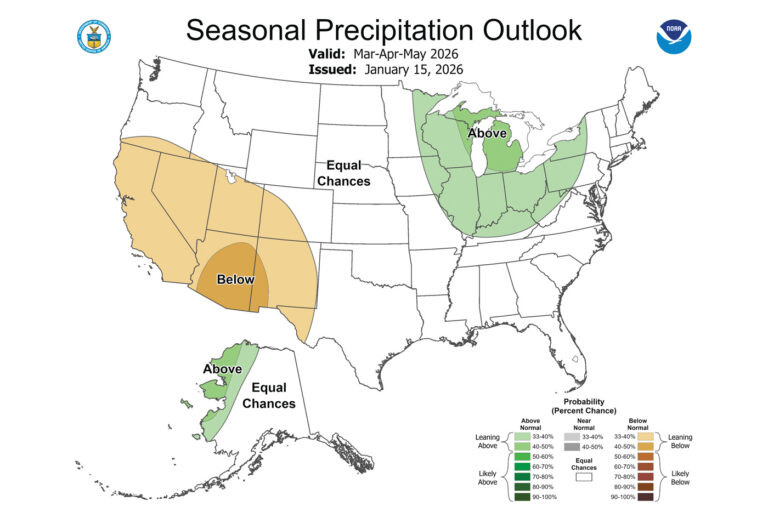
Even areas of the central Plains — including Colorado, Kansas and Nebraska — that have received drought-easing rain and snow in recent months could revert to a drier pattern. June-August 2021 should feature above-normal temperatures across the western half of the country, potentially contributing to topsoil moisture losses, heavy irrigation demands and an enhanced or prolonged wildfire threat. Expectations for a hot summer will be combined with increased odds of drier-than-normal weather throughout the Rockies, Great Plains and Northwest.
Implications of Western drought are greatly complicated by several factors. First, much of the West suffered through a second consecutive drier-than-normal winter wet season. As a result, Western reservoir storage has markedly declined from a year ago — down more than 8 million acre-feet in California alone. Second, 2020-2021 snowpack that was mostly below average to begin with is being lost early due to spring warmth via sublimation and melting. In the driest areas, only a fraction of the melting snow is reaching reservoirs, as drought-parched soils are absorbing runoff.
Third, drought-related problems are not only related to chronic Western drought but also myriad reasons including thorny legal issues, such as water rights and water compacts, and competing interests (e.g., agricultural, municipal, industrial, recreational and environmental water usage) for a limited resource. From the Pacific Coast to the Great Plains, drought has also had an adverse impact on rangeland, pastures and winter grains, leading to livestock feed shortages and increased costs to maintain healthy herds.