
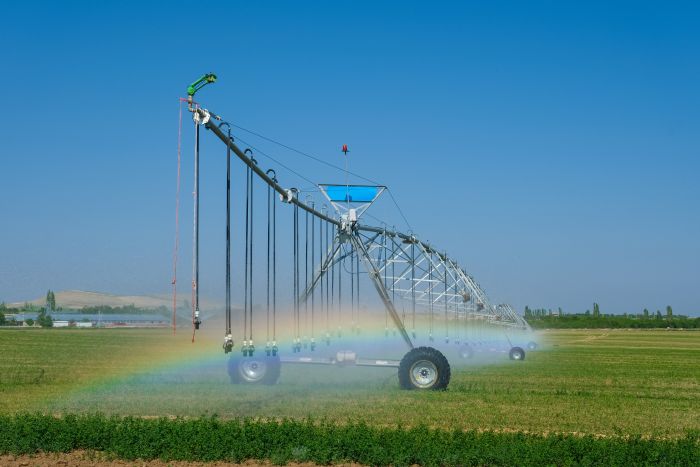
Agriculture is one of the nation’s most dangerous occupations, according to the National Safety Council. According to the USDA’s National Agricultural Statistics Service, U.S. farms reported 200,000 work-related injuries annually. Tractors and other machinery account for most injuries, but producers often overlook the potential safety risks associated with irrigation systems.
“Irrigation systems are powerful pieces of equipment that combine water, electricity, high water pressure and moving mechanical parts,” said Lyndon Kelley, an irrigation and groundwater expert at Michigan State University (MSU) Extension, St. Joseph County. “If they’re not operated or maintained properly, they can pose serious risks to both people and equipment.”
Unlike regularly used pieces of equipment, irrigation systems frequently sit idle for months. During the offseason, problems can develop unnoticed, making a thorough inspection before startup just as important as safe operation throughout the irrigation season.
One of the greatest risks is that many electrical hazards remain hidden until you service the system or start it up.
“Electrical grounding, maintenance and operating practices are critical to safety,” said Brenden Kelley, MSU Extension agriculture water use efficiency and irrigation educator in Mason County. “Equipment ages gradually and is utilized seasonally, creating significant potential for hazards that may go unnoticed. These hazards are often silent and invisible, making them difficult to detect. The consequences of poor maintenance and poor safety practice may be instant and lethal.”
Because electrical hazards cannot be seen, routine maintenance and consistent operating procedures are crucial. Even experienced irrigation users can take the system for granted when working around the equipment, making it important to follow the same safety protocols every time equipment is inspected or started.
Safety best practices
Keeping workers safe is always top priority. In addition to reducing injuries, proper safety practices offer additional benefits. Well-maintained systems experience fewer breakdowns, reduce costly downtime during critical watering periods and help keep irrigation equipment operating efficiently throughout the season.
Developing a simple pre-start inspection checklist that takes only a few minutes to complete can significantly reduce risk and help protect everyone working around irrigation equipment. Brenden and Lyndon recommend these eight irrigation safety practices before operating or maintaining on-farm irrigation systems.
Taking a few extra minutes before startup can prevent serious injuries, costly repairs and unexpected downtime, helping keep both workers and irrigation systems operating safely all season long.
Share on social media:

3030 Clarendon Blvd. | Suite 300 | Arlington, VA 22201
Tel: 703.536.7080 | Fax: 703.536.7019
HOME | ABOUT US | ADVERTISE | SUBSCRIBE | CONTACT | PRIVACY POLICY | IA ANTITRUST STATEMENT