
Home » News + Features » Government/Policy » H-2B visa cap increase ‘incredibly important’ for industry
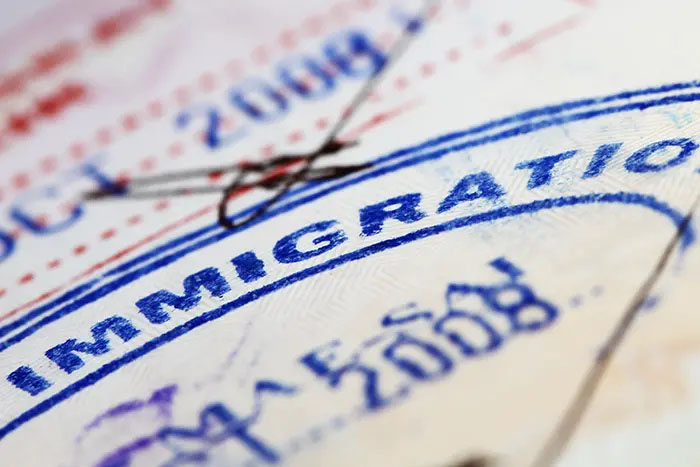
The Department of Homeland Security, Washington, D.C., announced its plan to release 64,716 additional H-2B visas for the fiscal year 2023 in October, potentially easing some of the labor challenges caused by low unemployment and a strong jobs market.
The H-2B visa program allows for the temporary admission of foreign workers to the United States to perform nonagricultural labor or services of a temporary nature if unemployed U.S. workers are not available.
“It’s incredibly important for our industry,” says Andrew Bray, senior vice president of government relations and membership at the National Association of Landscape Professionals.
Green industry professionals make up the largest group of participants in the H-2B program.
“We comprise between 40%-50% of all H-2B visas every year. The next closest industry is hospitality, and they account for about 12%.”
Since the H2-B visas are specifically earmarked for nonagricultural employment, the visa cap increase might not directly increase the pool of labor needed to support agricultural endeavors.
That being said, the general increase in available workers can help the workforce challenges that many growers and producers are currently facing.
The U.S. is currently experiencing low unemployment, with an unemployment rate in October of 3.7%, according to the Bureau of Labor Statistics.
“Think of this,” says Bray. “Why would you work a seasonal job that you can’t guarantee will be available next year — by the way, it’s also hard labor — when you could go be a Walmart employee and not have to lift an arm, and you’re guaranteed a job 12 months out the year, right? That’s the dynamic of who we’re competing with and the labor market in this country. It has been shifting for decades, but it’s really shifting now. So these sorts of jobs really require the importation of additional labor from other countries.”
According to the H2-B Workforce Coalition, 4.6 domestic jobs are sustained for every H2-B visa granted, visa recipients contribute to social security despite not being able to collect it, and the program can help limit illegal immigration.
Now that the cap has been raised, it’s a matter of waiting for policymakers to create the framework for how the visas will be distributed, including rules for applying for them, according to Nathan Bowen, advocacy director at the Irrigation Association.
One key part of the recent increase is that 20,000 visas will be set aside for workers from Honduras, El Salvador, Guatemala and Haiti. According to the Department of Homeland Security, the rider on the cap increase aims to expand legal pathways as an alternative to irregular migration.
“Now the next step here is that we need to get DHS to do rulemaking so that the visas can actually get to the people who can apply for them,” Bowen says.
According to Bray, the timing of when the rules are finalized has caused issues for some workers and their employers in the past.
Not so this year.
“The first year, they made an announcement in June for 15,000 additional visas,” he says. “That was great, but at that point, the workers didn’t get here in a timely fashion.”
Last year, the rule was published after Memorial Day, again causing problems with the timing of when H2-B visa workers arrived to begin their employment.
“So that broke our back again. It’s great you’re giving us these visas, but it doesn’t help if workers aren’t coming here on time,” says Bray.
This year’s announcement was made for the entire year, which was a game changer, Bray adds.
“They’ve never done that. They always wait until the second-half cap’s hit, but the first-half cap got hit really early this year. So they announced for both the first-half and second-half cap right now and said they will start writing the rules.”
Bray says the rule should come out around Thanksgiving or early December. Once the rule is published, applications can be submitted effectively, visa processing can begin, and workers can arrive at the ideal time.
Bowen says that one of the challenges that accompany the program is that it can be unpredictable. Still, as long as professionals take advantage of the program, the additional labor should benefit the industry by expanding the overall labor pool.
“Typically, what you see is larger companies participating in the program because the program can be hard to participate in. It’s expensive, it’s unpredictable,” Bowen says. “For those companies that can participate in the program well and predictably, it gives them a predictable source of labor.”
In general, this expansion of the labor pool might be one of the most impactful benefits of the H2-B visa program for the irrigation industry, Bowen reiterates.
“I think that while some of the irrigation industry uses the H2-B program — which is a direct benefit to them — it gives those who don’t participate in the program breathing room in the labor market and helps there not be quite as much competition,” says Bowen.
Read more about labor issues.
Share on social media:


3030 Clarendon Blvd. | Suite 300 | Arlington, VA 22201
Tel: 703.536.7080 | Fax: 703.536.7019
HOME | ABOUT US | ADVERTISE | SUBSCRIBE | CONTACT | PRIVACY POLICY | IA ANTITRUST STATEMENT