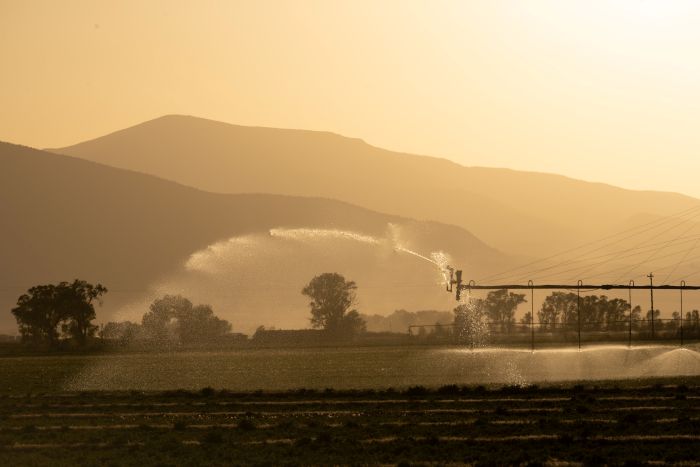
Clemson University researchers are studying how the correct amounts of water and nitrogen can be applied automatically to crops through overhead irrigation systems.
Led by Jose Payero, irrigation specialist at the Edisto Research and Education Center in Blackville, South Carolina, the research team is working to show how intelligent water and nutrient placement (IWNP) can help farmers increase profits while minimizing effects of agricultural practices on the environment.
The project is funded through a $453,405 grant from the United States Department of Agriculture National Institute of Food and Agriculture to develop technologies farmers can use to manage nutrients and water applied to crops through overhead irrigation systems.
“IWNP uses smart sensing and model-based decision support systems that can be readily adopted by farmers on both small and large scales,” said Payero, who leads the Irrigation Research/Cooperative Extension Service program for Clemson. “This advanced technology will make it much easier and cost-effective for farmers to apply irrigation water and nutrients – like nitrogen fertilizer – where, when and in the amount needed to meet crop requirements.”
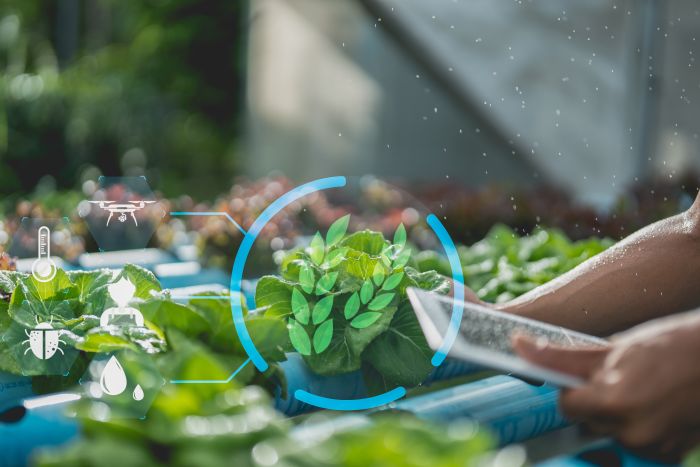
The ultimate goal is for this new system to be retrofitted on existing overhead irrigation equipment and automatically create site-specific irrigation and fertigation applications based on real-time sensor data (soil moisture sensors installed on-site and optical sensors mounted on the irrigation system) or from prescription maps developed using data from Unmanned Aerial Vehicles (UAVs). Payero said this system will be able to adjust to changes in soil types, land use, crop types and topography.
“Currently, there is no affordable variable-rate, site-specific fertigation system available to apply the correct amount of nitrogen within a field through an overhead irrigation system, especially for variable rate irrigation systems,” Payero said. “This new system will enable growers to apply nitrogen fertilizer where and in the amount needed through overhead sprinkler irrigation systems, which is the predominant type of row crop irrigation system used in the southeastern United States.”
“Outreach efforts will result in an improved stakeholder understanding and adoption of advanced site-specific water and nutrient management,” Payero said. “Adoption and use of the new technology will result in reduced water, energy and fertilizer use, as well as improved environmental quality and improved grower sustainability.”
This project is funded through May 31, 2024.