

A University of Missouri study has found that irrigation is the best option for helping soybeans recover yield after being injured by dicamba drift. In a recent Integrated Pest & Crop Management newsletter, MU weed scientist Kevin Bradley and master’s student Brian Dintelmann shared the results of a three-season research trial to determine what tactics, if any, could be used as a recovery treatment for dicamba-injured soybeans.
In this research, the group intentionally injured soybean at the V3 or R2 growth stage with 1/100th the normal use rate of dicamba (i.e., a common ‘driftable dose’). Two weeks after this drift event occurred at each growth stage, we applied various ‘recovery treatments’ to the soybean to determine if yield losses from dicamba injury could be minimized or perhaps even eliminated. The recovery treatments we applied included a variety of common foliar fertilizer products (PercPlus, Megafol, YieldOn, etc), a fungicide (Priaxor), urea with Agrotain, a plant growth hormone (Radiate), and weekly irrigation.
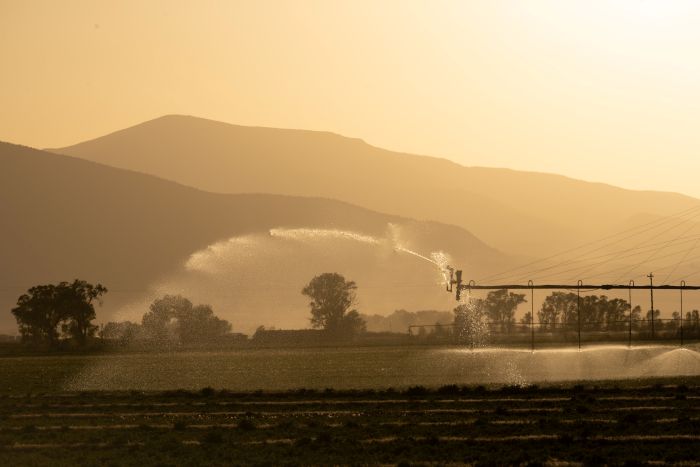
According to the researchers, “Over the three years that the study was conducted, the results are pretty straight-forward; weekly irrigation was the only recovery treatment that resulted in yields that were higher than the dicamba-injured control. However, none of the recovery treatments—not even weekly irrigation—resulted in yields that were as high as the non-treated control.”
Collectively, results from all three years of this study indicate that if soybeans have become injured with dicamba, the best thing to do is to irrigate. This will help them recover some, but not all, of the yield that would have been there had the injury not occurred.
Go online for more information.
Share on social media:
3030 Clarendon Blvd. | Suite 300 | Arlington, VA 22201
Tel: 703.536.7080 | Fax: 703.536.7019
HOME | ABOUT US | ADVERTISE | SUBSCRIBE | CONTACT | PRIVACY POLICY | IA ANTITRUST STATEMENT