
At climate events and corporate sustainability forums, conversations around methane and other “superpollutants” are gaining momentum. Methane and nitrous oxide may not dominate headlines the way carbon dioxide does, but their climate impact is profound. Methane is roughly 27-30 times more potent than CO₂ over a 100‑year timeframe, while nitrous oxide is nearly 300 times more powerful. Because these gases are also short‑lived, reducing them offers immediate climate and air quality benefits.
Yet in many of these discussions, one critical sector, and one highly deployable solution, is often missing: irrigation.
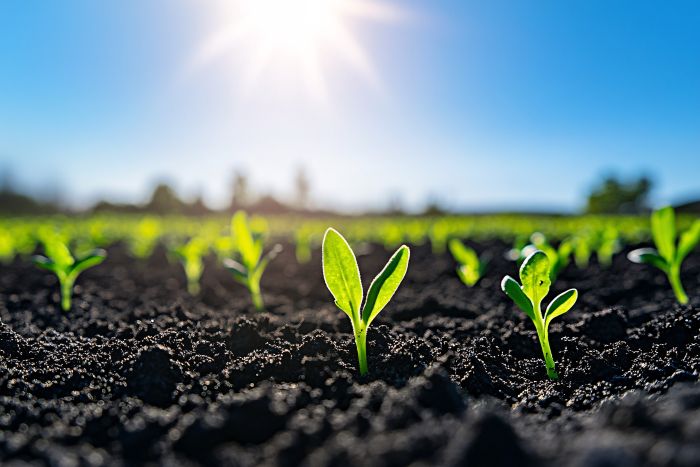
Agriculture is a significant global source of methane (CH₄) and nitrous oxide (N₂O), and the way we manage water plays a central role in how these gases are generated. Flood and over‑irrigated systems create anaerobic soil conditions that encourage methane production. Excess soil moisture, combined with nitrogen inputs, can drive nitrous oxide emissions through denitrification. In other words, emissions are not just a fertilizer issue, they are a water management issue.
This is where irrigation modernization, particularly the transition to drip irrigation, becomes highly relevant. Drip fundamentally alters soil biogeochemistry by maintaining aerobic root zones, suppressing methane formation, and enabling precision fertigation that reduces excess nitrogen availability. These changes directly target the conditions that lead to superpollutant emissions, while simultaneously delivering familiar benefits: improved water efficiency, more consistent yields and healthier soils.
What makes this approach especially compelling is that it is not theoretical. Drip irrigation is already widely deployed across a diverse range of crops and regions, and its impacts are measurable at the field scale. Practice‑based baselines, such as irrigation method, soil moisture conditions and fertilizer application practices, allow emissions reductions to be quantified using peer‑reviewed emission factors and established global warming potential metrics. Importantly, these reductions can be reported as non‑CO₂ emissions reductions that complement, rather than complicate, existing Scope 1–3 accounting frameworks. This approach requires no reliance on carbon credits or carbon removal claims.
At a recent climate convening, a respected water colleague remarked that while climate conversations are advancing rapidly, water continues to receive far less attention than it deserves. That observation rings especially true in superpollutant discussions. Many corporate climate strategies are actively searching for credible, near‑term actions that deliver real reductions without introducing reputational or accounting risk. Irrigation modernization offers exactly that: a ready‑to‑deploy pathway that aligns climate, water and agricultural productivity goals.
Water professionals have long understood that irrigation decisions influence far more than crop performance. Today, those decisions also represent one of agriculture’s most immediate levers for addressing superpollutants. As corporations deepen their commitments in this space, the irrigation industry has both an opportunity and a responsibility to make that connection clear.
If superpollutant reduction is truly becoming a priority, it is time for irrigation, and water management more broadly, to take its rightful place in the climate conversation.
Written with the support of AI.
Val Fishman is advocacy and development consultant for Orbia Precision Agriculture (Netafim).
Share on social media:

8280 Willow Oaks Corporate Drive | Suite 630 | Fairfax, VA 22031
Tel: 703.536.7080 | Fax: 703.536.7019
HOME | ABOUT US | ADVERTISE | SUBSCRIBE | CONTACT | PRIVACY POLICY | IA ANTITRUST STATEMENT