
As producers head into the 2026 growing season, there is a consistent theme: irrigation equipment must work efficiently. With tighter margins and ongoing pressure on water resources, growers are focusing on how to get more from the equipment they already own, while selectively investing in technologies that can demonstrate a return on investment.
“There is a lot of focus on how you can get the most out of your equipment,” said Crystal Powers, an associate extension educator at the Nebraska Extension. “It’s a challenging economic year, and if people are going to invest in technology, it needs to have a quick payback.”
Here, Powers shares highlights from the Nebraska Extension Master Irrigator “Shop Talk” events that can help producers maximize their irrigation systems this season.
Catching problems before they become costly
One way to maximize efficiency is to ensure irrigation equipment is working optimally so that the right amount of water is applied across the whole field.
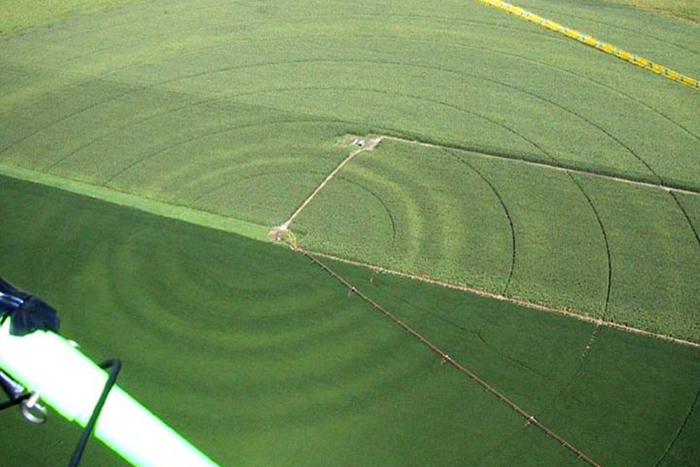
“If there’s a ring in the field with a center pivot system, that usually means there is a malfunction somewhere,” Powers said. “Some of those can be hard to see, like a pressure regulator issue on the pivot.”
When pressure regulators on the pivot aren’t working properly, the entire system is affected. You might get too much water in some spots and not enough in others.
“Sometimes you don’t see pressure issues, and it shows up as a yield drag,” she said. “Using a simple pressure gauge you can test the system while it’s operating and double check that it’s functioning properly.”
Timing irrigation schedules to cut costs
Strategically planning when to start and stop irrigating is another cost savings technique, according to Powers. Eliminating even one to two irrigations a season can save money.
In regions that start with a full soil water profile, roots extend deeper and access new zones of stored moisture, Powers explained. That may create an opportunity to delay the first irrigation and allow the roots to chase existing water rather than irrigating the field. She recommends a similar end-of-season strategy.
“We try to encourage growers to let their soils dry down as the season ends because it saves pumping costs and it also leaves more room for off-season water storage,” she said. “That’s free water and you want to maximize how much it might deep percolate because you have root to store it.”
Ideally, the goal all season long is to keep the soil moisture, which varies by soil type, within an optimal range. Knowing what your soils can hold and hitting crops with water when they are in the most sensitive growth stages.
“Hitting those windows with adequate moisture, while allowing for some controlled stress at less sensitive stages, can improve water-use efficiency without sacrificing yield,” she said. “There are a lot of good tools to monitor soil moisture and help farmers with their irrigation scheduling.”
Soil moisture monitoring tools, from simple devices to advanced sensors, are central to making these decisions. They help growers understand both how much water the soil can hold and how that storage changes over time.
Keeping pace with new technologies
New remote sensing technologies are entering the market to provide a full-field view of what is going on from soil sensors to nutrient levels and even solutions that can alert growers to incorrect tire pressure or breakdowns on a center pivot to allow for faster repairs.
“I’m really excited for some of the remote sensing technologies I’m seeing from our industry partners and sponsors,” she said. “These tools are going to get a lot more information about what’s happening across the whole field into the hand of the farmer to take the guesswork out of the basics like, when do we start and stop? How frequently do we need to be irrigation, and insights on the maintenance side.”
Master irrigator events and vendor field days are an opportunity to experience the new technologies that will allow for more precise irrigation, reducing guesswork and unnecessary trips to distant fields and maximizing water-use efficiency.
Share on social media:


8280 Willow Oaks Corporate Drive | Suite 630 | Fairfax, VA 22031
Tel: 703.536.7080 | Fax: 703.536.7019
HOME | ABOUT US | ADVERTISE | SUBSCRIBE | CONTACT | PRIVACY POLICY | IA ANTITRUST STATEMENT