
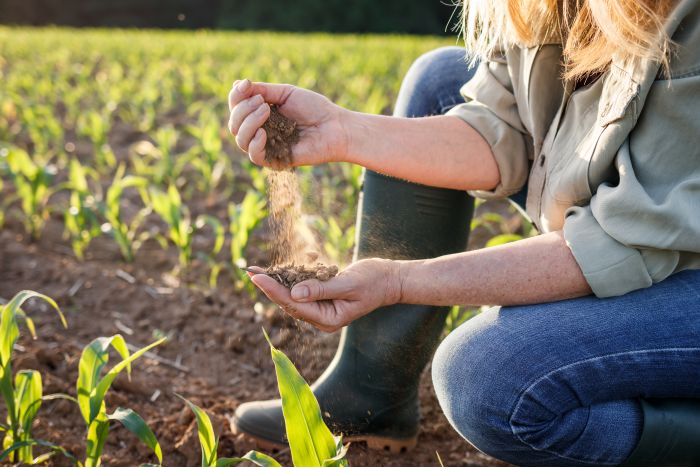
Producers across multiple regions of the U.S. are heading into a growing season defined by drought conditions, forcing many farmers and ranchers to rethink forage strategies, irrigation plans and long-term operational resilience.
For livestock producers, the question becomes, “How do we maintain forage when water is limited, and traditional crops may not be viable?”
Mitch Stephenson, PhD, Nebraska Extension rangeland management specialist in Scottsbluff, described current conditions as “emergency room” drought management. In years like this, he said, proactive planning and flexibility are essential.
Beef producers are already discussing which grazing systems and annual forage crops are best suited for water-deficit conditions. Many livestock operations that typically rely on irrigated alfalfa to feed their herds and sell for revenue anticipate lower yields if their fields don’t receive enough water. Other forage crops are also likely to be impacted.
“Annual forages are going to be important in years like this,” he said. “The water might not be there for Western Nebraska farmers to get sugar beets, dry edible beans or even corn started, but we might have enough water for a later-season annual forage.”
For example, growers are considering warm-season species such as sorghum-Sudan grass and millet, which they can plant in June. These forage species require less water and still produce livestock feed.
“We might have enough water that we could do a later-season annual forages, like hay millets, and other warm-season crops that we can get in the ground in June. Even with less water available through rain or irrigation, you would be able to get lower-quality forages that could be marketable as hay for cattle,” he explained.
In drought years, that hay can be both scarce and valuable. Annual forages can be grazed directly, harvested as hay or silage, or managed through lower-cost approaches such as swath grazing.
“A lot of folks have been swath grazing, which essentially means you swath cut it, and then you leave it in the row, and then you’re able to hold on to that quality essentially without the added cost of baling,” he said. “Then you can go back out in the fall and winter and graze on that. The quality tends to hold up well in a swath.”
He cautioned producers to be aware of prussic acid and nitrate issues in certain forage species, especially during frost, and to manage harvest height or blend feeds accordingly. Still, he sees annual forages as a tool for managing drought conditions while improving long-term resilience.
How to monitor drought conditions to guide decisions
Producers have access to tools that allow them to track drought severity and soil moisture conditions to guide irrigation decisions, according to Eric Hunt, PhD, an assistant extension educator of Agricultural Meteorology and Climate Resilience at the University of Nebraska–Lincoln.
The U.S. Drought Monitor releases updated drought severity maps weekly to provide a visual snapshot of which regions are under drought conditions. He also encouraged growers to use localized weather and soil-monitoring tools like precipitation reports and resources available through State Climate Offices and Regional Climate Centers.
Farmers in areas experiencing drought conditions are seeing the economic impacts. In the Nebraska panhandle specifically, the winter wheat crop is a disaster, according to Hunt.
“Anybody dryland farming in the southern Panhandle probably won’t even bother harvesting wheat this year. It’s that bad,” he said. “This year is going to be very, very challenging. It’s going to be essential that this coming fall and winter deliver much more consistently good moisture.”
Even though drought conditions of this magnitude remain statistically rare, he believes irrigation challenges in the region will continue to grow.
How people manage cropping systems and soil is going to become increasingly critical going forward, he noted. Beyond the immediate crisis, many producers are beginning to question the long-term viability of farming in increasingly dry conditions.
“At the Nebraska Extension’s Managing Drought Workshop in April, I heard several people talking about how what they perceive as climate change is making farming there more and more challenging,” he said. “They’re starting to ask questions about how much longer they want to do this.”
Share on social media:
3030 Clarendon Blvd. | Suite 300 | Arlington, VA 22201
Tel: 703.536.7080 | Fax: 703.536.7019
HOME | ABOUT US | ADVERTISE | SUBSCRIBE | CONTACT | PRIVACY POLICY | IA ANTITRUST STATEMENT