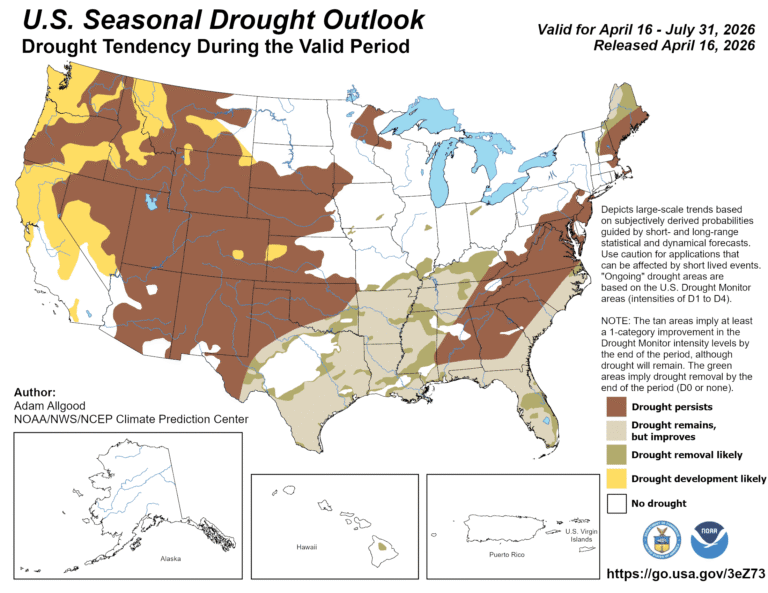
Colorado River Basin states and water users this summer have been both posturing and scrambling to find ways to respond to Reclamation Commissioner Camille Touton’s June 2022 message to a Senate committee: The seven states must come up with an emergency deal by mid-August to conserve between at least 2 million acre-feet of water in the next year just to keep Lake Mead functioning and physically capable of delivering drinking water, irrigation and power to millions of people.
In the Lower Colorado River Basin, 4.4 MAF of water is available to California. Arizona gets about 2.8 MAF, the country of Mexico receives 1.5 MAF and Southern Nevada gets 300,000 AF.
Patrick O’Toole, Wyoming rancher and Family Farm Alliance president, told the Senate committee that farmers and ranchers are always the first ones asked to make sacrifices.
Patrick O’Toole, Wyoming rancher and Family Farm Alliance president, told the Senate committee that farmers and ranchers are always the first ones asked to make sacrifices.
Arizona lawmakers are also moving forward with efforts to solve the crisis. One of the final bills that was signed into law by Governor Doug Ducey provides $1.2 billion over three years to find new sources of water and further lower water demand in the state.
Irrigation districts, farm organizations and producers in California’s Imperial Valley and Yuma, Arizona, are working on a variety of proposals that could eventually be merged and used to work with the states and Congress to provide additional resources, tools and authorization to address the grim hydrology.
There are several proposals that have been floated since late June, and key issues that are being addressed include potential costs to compensate growers for limiting water use, costs associated with mitigating water use for economic and social impacts to communities, agencies and service providers, and addressing additional environmental and community safety concerns associated with the shrinking Salton Sea, which receives much of its inflow from Imperial Irrigation District return flows.
Farmers along the Lower Colorado River Basin are bracing for severe reductions next year in their river’s water supplies. Those cuts could lead to widespread crop production cutbacks, major economic dislocation and, possibly, food shortages.
States in the Upper Colorado River Basin (Wyoming/Colorado/Utah/New Mexico) through the Upper Colorado River Commission last month told Reclamation that persistent drought in the Basin has already diminished their available water supplies and that any additional water use cuts in the Basin should focus on water used by the Lower Basin states of Arizona, California and Nevada. The UCRC letter called for enhanced water measurement, monitoring and reporting infrastructure to improve water management, but it stopped short of identifying any water cutbacks in the Upper Basin.
The Family Farm Alliance has been monitoring meetings with several of its member districts in Arizona and California. We were also in the mix of the negotiations that led to $4 billion of Inflation Reduction Act money being dedicated to Western drought, with priority placed on the Colorado River, as discussed in the online exclusive article at irrigationtoday.org/IRA.
So, things are tense, but the $4 billion in the IRA provides reasons for the U.S. Bureau of Reclamation not to come out of the gate with mandatory curtailments as their first move.
The Alliance is now working with other Colorado River agricultural and water interests to develop a letter to Reclamation leadership, providing suggestions as to how the federal government can best begin implementing the IRA drought program efficiently and transparently.
3030 Clarendon Blvd. | Suite 300 | Arlington, VA 22201
Tel: 703.536.7080 | Fax: 703.536.7019
HOME | ABOUT US | ADVERTISE | SUBSCRIBE | CONTACT | PRIVACY POLICY | IA ANTITRUST STATEMENT