Home » News + Features » Technology » Ozone for irrigation: Why advanced water treatment is becoming essential for the future of agriculture
Agriculture has always depended on water, but the way growers manage this resource is changing rapidly. Water scarcity, rising fertilizer costs, labor shortages, stricter environmental regulations and growing consumer expectations for sustainable production are forcing producers to get more value from every gallon they apply.
Today’s irrigation systems are no longer viewed simply as a means of delivering water. They are becoming integral to plant health, nutrient management and overall production efficiency. One technology receiving increased attention is the use of ozone.
Ozone is one of the most powerful oxidants used in water treatment. Generated on-site from oxygen, it has been used for decades in municipal drinking water, food processing, aquaculture, pharmaceutical manufacturing and industrial-process water because it effectively disinfects without leaving harmful chemical residues.
For irrigation, ozone offers several important benefits, including pathogen reduction, biofilm control, improved dissolved oxygen, enhanced nutrient availability, cleaner irrigation lines and support for water reuse. Because ozone naturally decomposes back into oxygen, it leaves no persistent chemical residual, making it especially attractive for growers pursuing sustainable production.
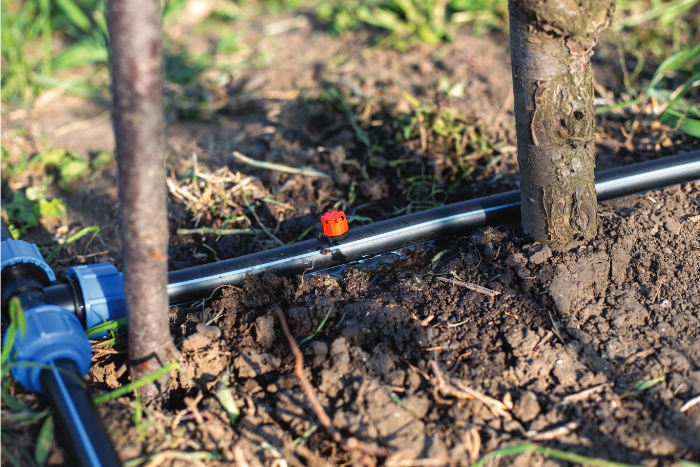
One of the earliest agricultural applications for ozone has been controlling biological fouling within irrigation systems. Drip irrigation systems using reclaimed water or nutrient-rich fertigation solutions are particularly susceptible to algae, bacteria, slime and biofilm buildup. Over time, these deposits can clog emitters, reduce distribution uniformity and, ultimately, lower crop performance.
Uniform water application is one of the most important factors affecting irrigation efficiency. Even well-designed systems lose effectiveness when emitters begin plugging. By oxidizing organic contaminants and reducing microbial growth, ozone helps keep irrigation lines cleaner while maintaining more consistent flow throughout the system. For vineyards, orchards, nurseries, greenhouses and other high-value crops, maintaining distribution uniformity can translate directly into improved yields and reduced maintenance costs.
Ozone also contributes to healthier root systems by increasing dissolved oxygen levels in irrigation water. Healthy roots require oxygen to absorb nutrients efficiently, yet saturated soils and recirculated irrigation systems can create oxygen-deficient conditions that stress plants and encourage root pathogens.
As ozone naturally decomposes into oxygen, properly designed systems can improve root-zone oxygenation, supporting stronger root development, better nutrient uptake, healthier microbial populations and improved resilience during periods of environmental stress. This reflects a broader shift in agriculture from simply irrigating crops to optimizing the biological environment surrounding the root system.
Water reuse represents another area where ozone is gaining importance. As freshwater supplies become increasingly constrained, many growers are adopting recycled irrigation water, tailwater recovery systems, greenhouse nutrient recirculation and municipal reclaimed water. While these approaches conserve water, they also increase the risk of spreading pathogens and accumulating organic contaminants.
Ozone provides an effective treatment option because it destroys bacteria, viruses, molds and many organic compounds while improving overall water quality. In closed-loop greenhouse and hydroponic systems, ozone helps maintain cleaner recirculating water without introducing additional chemicals into the production system.
Controlled environment agriculture has also highlighted ozone’s value. During the rapid expansion of vertical farming, ozone became an attractive technology because it could disinfect recirculated nutrient solutions while leaving no chemical residual. Many early vertical farming ventures struggled with high energy costs and capital requirements, and the industry learned that success depends on balancing advanced technology with operational efficiency.
Today, controlled-environment agriculture is evolving toward high-value specialty crops, pharmaceutical and nutraceutical plants, seedling propagation, cannabis cultivation and food production in water-limited regions. These facilities demand precise control of water quality, making ozone well suited for maintaining reliable recirculation systems while supporting automation and precision crop management.
Sustainability remains one of agriculture’s defining challenges. Since farming accounts for roughly 70% of global freshwater withdrawals, technologies that improve water efficiency will become increasingly important. Ozone supports this objective by reducing dependence on chemical disinfectants, improving irrigation system performance, enabling greater water reuse, reducing nutrient losses and promoting healthier root systems.
At the same time, irrigation itself is becoming increasingly data driven. Sensors, automation, artificial intelligence, satellite imagery and advanced analytics are helping growers optimize irrigation scheduling, fertigation and crop health. Water-treatment technologies are becoming integrated components of these precision agriculture systems rather than stand-alone utility equipment. Properly designed ozone systems can complement reservoir management, fertigation, hydroponic recirculation, reclaimed water treatment and post-harvest washing operations.
Like any advanced technology, however, ozone is not a universal solution. Successful applications depend on proper engineering, water-quality evaluation, adequate contact time, system monitoring and appropriate safety measures. Because water sources vary significantly — from groundwater and surface water to reclaimed water and recirculated nutrient solutions — each application should be designed around specific treatment objectives.
Operator training is equally important. Ozone is a powerful oxidant and should always be used with appropriate monitoring, ventilation, off-gas destruction, and established operating procedures to ensure safe and reliable operation.
As agriculture continues to produce more food with fewer resources, advanced water-treatment technologies will play an increasingly important role. Ozone is unlikely to replace every conventional water-treatment method, but for high-value crops, greenhouse production, reclaimed water systems and precision irrigation, it offers measurable improvements in water quality, system reliability and sustainability.
The future of irrigation lies not simply in delivering water, but in managing it more intelligently. Ozone is one of the tools helping growers improve efficiency, conserve resources and build more resilient agricultural systems for the years ahead.
3030 Clarendon Blvd. | Suite 300 | Arlington, VA 22201
Tel: 703.536.7080 | Fax: 703.536.7019
HOME | ABOUT US | ADVERTISE | SUBSCRIBE | CONTACT | PRIVACY POLICY | IA ANTITRUST STATEMENT