Sponsored by

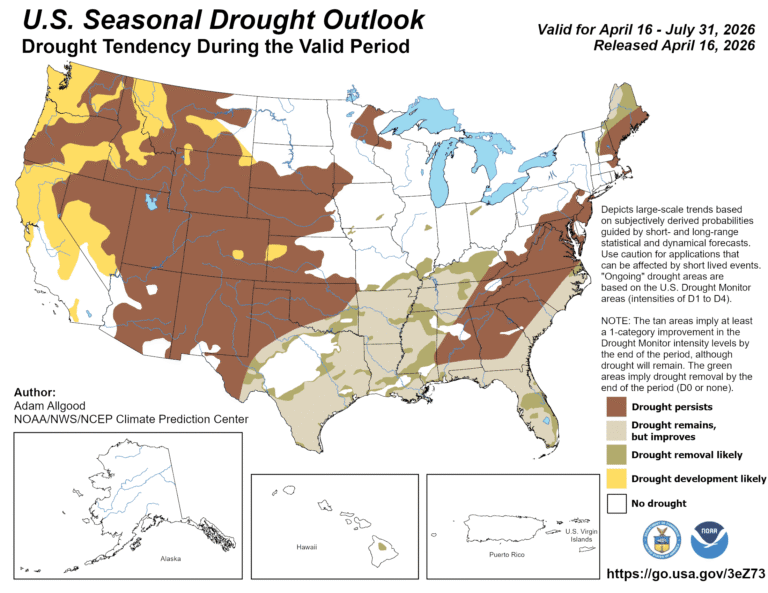
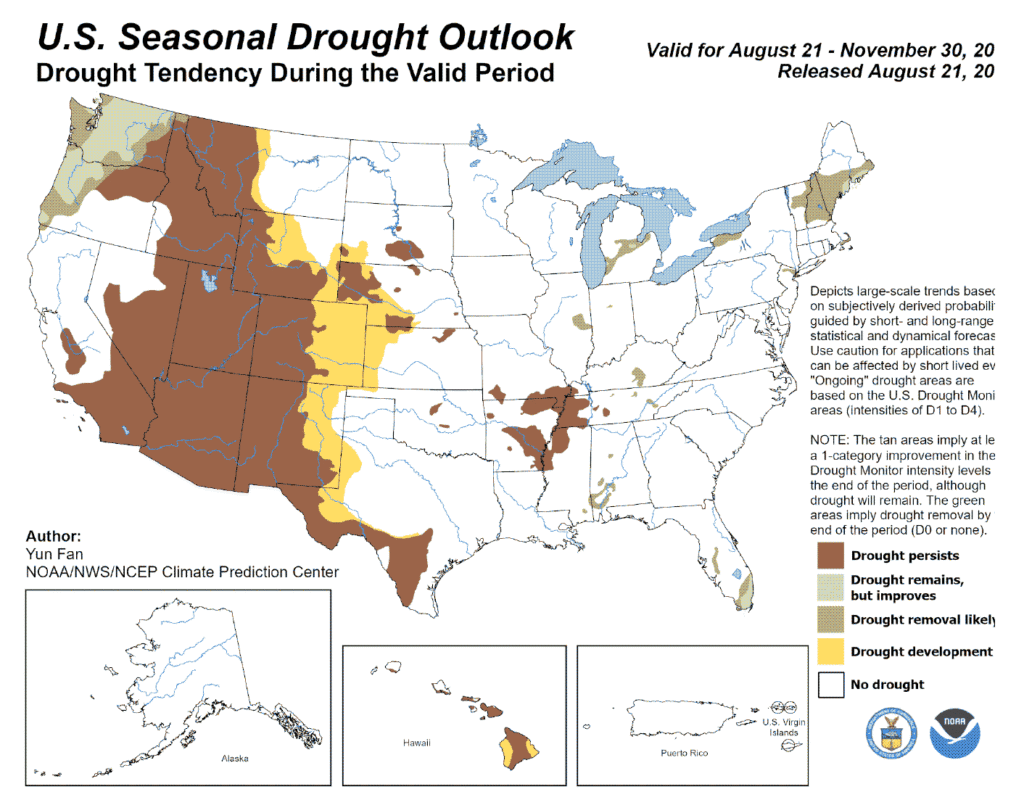
Drought coverage across the continental United States increased during the late summer and early autumn of 2025. In fact, according to the U.S. Drought Monitor, coverage in the Lower 48 states increased from 30% to 43% during the seven-week period ending Sept. 23.
The most significant U.S. drought development or intensification occurred from the mid-South into the Northeast, although parts of the West and Southeast have also experienced unusually dry weather. The effects of worsening drought have included stress on pastures, low streamflow and reduced surface-water supplies.
Looking ahead, at press time, the National Weather Service (NWS) was forecasting a greater than 70% chance that La Niña would develop by the end of 2025. Typically, La Niña results in a warmer- and drier-than-normal cold season across the southern tier of the U.S. The official NWS outlook for December 2025 through February 2026 calls for the likelihood of a drier-than-normal winter from southern California to the southern Atlantic Coast, consistent with La Niña.
Conversely, odds are tilted toward a wetter-than-normal winter across northern sections of the Rockies and Great Plains, in addition to the lower Midwest, including much of the Ohio Valley.