
Home » News + Features » Technology » Can alternative perennial forages help growers use less water?
As pressure on water use and availability grows across the Upper Colorado River Basin, growers and ranchers face a difficult question: How can they reduce water use without sacrificing crop yields, livestock production or profitability?
“How we manage water use in the Upper Basin affects how much water is in the Lower Basin, so it’s an all-hands-on-deck situation,” said Amy Kremen, the associate director of the Irrigation Innovation Consortium. “It’s like a set of dominoes. Protein production in the United States depends on the livestock industry, which depends on crops and the water it takes to grow them.”
But experimenting with new technologies and strategies to manage irrigation water use more effectively can be expensive and risky. Growers are already operating on thin margins, and taking a chance on new approaches can make profits even slimmer.
A newly announced $1.75 million Colorado Water Plan grant will help Colorado State University (CSU) expand its Testing Ag Performance (TAPS) program to bridge the gap and encourage farmers to test different irrigation methods, technologies and alternative forage crop varieties.
“The reality is it’s hotter, it’s drier and there is less snowpack, so there’s less recharge of the system,” she said. “The TAPS program is helping people figure out newer strategies and how to integrate them into their operations economically.”
Testing water management strategies risk-free
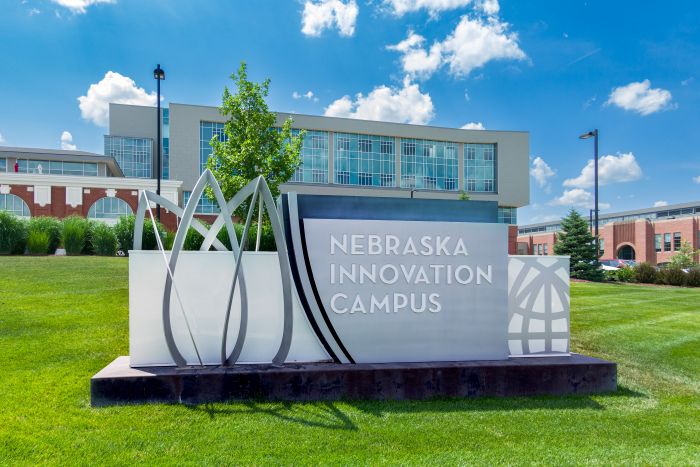
In 2017, the University of Nebraska-Lincoln launched the Testing Ag Performance (TAPS) program to create a risk-free environment where growers compete to identify management strategies that improve crop yields, water-use efficiency and profitability.
CSU became one of 10 states to adopt the program in 2023 and has it every year since at the university’s Agricultural Research, Development and Education Center (ARDEC) in Fort Collins. Through the program, competitors make real-world farming decisions (hybrid selection, seeding rate, irrigation, fertilizer use, insurance, marketing, etc.) through an online portal and CSU staff implement those decisions in the field.
“It’s a great way to bring the agricultural community together around something that is fun and helps farmers try strategies and generate data on what can be applied on the landscape at scale in the years to come,” Kremen said.
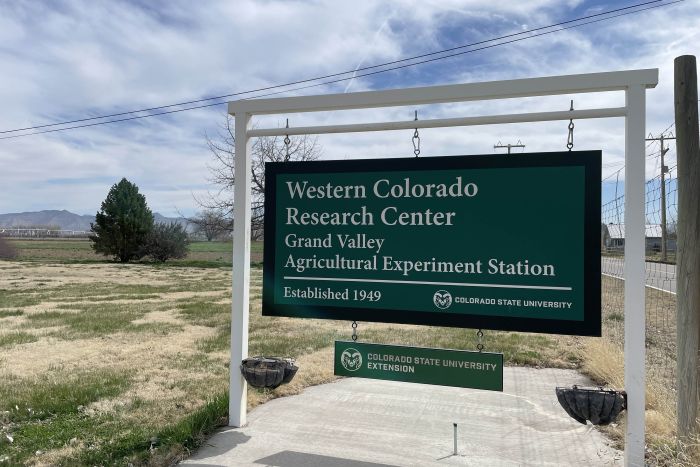
The new Colorado Water Plan grant will fund “Scaling CSU-TAPS for Agricultural Drought-Resilience and Statewide Impact,” which will establish a new furrow-irrigated perennial forage management TAPS competition at CSU’s Western Colorado Research Center in Fruita, the first program focused on perennial forage crops. The grant will also expand the existing sprinkler-irrigated corn competition at ARDEC.
Over three years, teams will compare perennial forage crop production under full irrigation and reduced-water conditions, including scenarios where water is reduced during one year or in back-to-back years to see how different forages respond, Kremen explained. While the guidelines are still being developed, it’s likely teams will have an opportunity to grow a monocrop or interseed with grasses and other legumes.
The goal is to determine which crops and irrigation management strategies are most effective for reducing water use while maintaining yield and profitability. A small-scale livestock grazing component will be included to reflect the region’s production landscape.
“Bringing CSU-TAPS to the Upper Colorado Basin allows us to strengthen our engagement and research foothold in one of the most important crops for our state, and the Basin overall,” said Perry Cabot, CSU Colorado Water Center Extension professor based at WCRC. “Through the competition, we will be working with teams of farmers to understand drought tolerant seed mix options; ways to integrate potential water leasing without compromising long-term soil health; better weed management; and different irrigation regimes.”
Alternative forage varieties, including drought-tolerant alfalfa and other perennial crops, will be a key focus of the competition. Cabot has spent about a decade studying the nutritional value, drought tolerance and potential to replace conventional alfalfa production in western Colorado, according to Kremen.
“There is a lot of work on the corn side and plants have evolved for drought resistance,” she said. “The TAPS expansion will now give us a chance to test different perennial forage varieties and see how their water use is different because the plant structure—the stems, leaves and how the plant transpires—is different.”
In addition to evaluating forage varieties, testing different irrigation strategies and allowing growers an opportunity to use remote sensors is critical to making more informed irrigation decisions. Producers interested in participating in the CSU-TAPS Sprinkler Corn Competition or the CSU-TAPS Perennial Forage Competition are encouraged to register today.
The total investment supporting CSU-TAPS is $2,332,664, including the Colorado Water Plan grant and matching contributions of more than $584,000 from project partners. Project partners include multiple USDA agencies, numerous CSU research programs, the Colorado Water Center and private companies.
CSU-TAPS is actively seeking program partners and sponsors who can advise, support market and workforce development, contribute technology, seed and funding for this work along with other ways to engage, including helping to co-develop the new forage competition’s rules.
Share on social media:

3030 Clarendon Blvd. | Suite 300 | Arlington, VA 22201
Tel: 703.536.7080 | Fax: 703.536.7019
HOME | ABOUT US | ADVERTISE | SUBSCRIBE | CONTACT | PRIVACY POLICY | IA ANTITRUST STATEMENT