
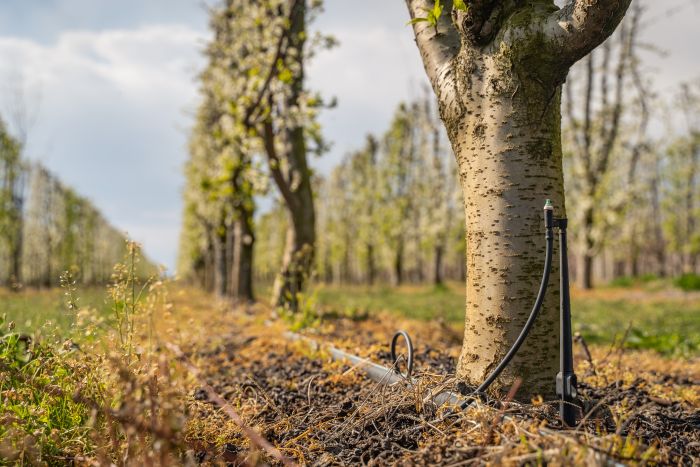
UC Davis announced an inaugural Advanced School on Microirrigation for Crop Production to run from March 30 to April 3, 2026, bringing practical irrigation training to California for the first time. The program combines three days of classroom instruction at UC Davis with two days of field visits to fruit, nut, vegetable, berry and wine-grape production systems, with an online option available for the first three days.
The program will help participants improve water-use efficiency, fertilizer-use efficiency and on-farm irrigation management at a time of increasing water scarcity and regulatory complexity.
In the school’s online announcement of the event, Professor of Agricultural Water Management for Cooperative Extension at the University of California, Davis, Daniele Zaccaria said, “This offers a unique, hands-on opportunity to learn directly from global leaders in the field, combining cutting-edge science, real-world applications and field experience. It’s an excellent investment of time for anyone committed to the future of crop production in semi-arid and arid environments.”
Topics include microirrigation system design, scheduling, automation, maintenance, fertigation, chemigation and salinity management. The school is aimed at farmers, ranch managers, crop consultants, irrigation practitioners, water planners and others involved in crop production. Participants will also receive a certificate of completion and continuing education credits.
Share on social media:

3030 Clarendon Blvd. | Suite 300 | Arlington, VA 22201
Tel: 703.536.7080 | Fax: 703.536.7019
HOME | ABOUT US | ADVERTISE | SUBSCRIBE | CONTACT | PRIVACY POLICY | IA ANTITRUST STATEMENT