Sponsored by

Sponsored by droughtmonitor.unl.edu
Near the midpoint of the Western winter wet season, a fascinating water supply picture is emerging. Since the water year began Oct. 1, many areas of the western United States have received above-normal precipitation. However, a barrage of warm storms in December 2025 and early January 2026 left the Western landscape relatively wet but lacking snow, at least compared to normal values.
Such odd results are not always straightforward and can vary greatly from place to place. For example, some reservoirs are brimming from heavy winter rain, while others have been partially drained — with water lost to the ocean — to prevent potential spring flooding if heavy precipitation returns.
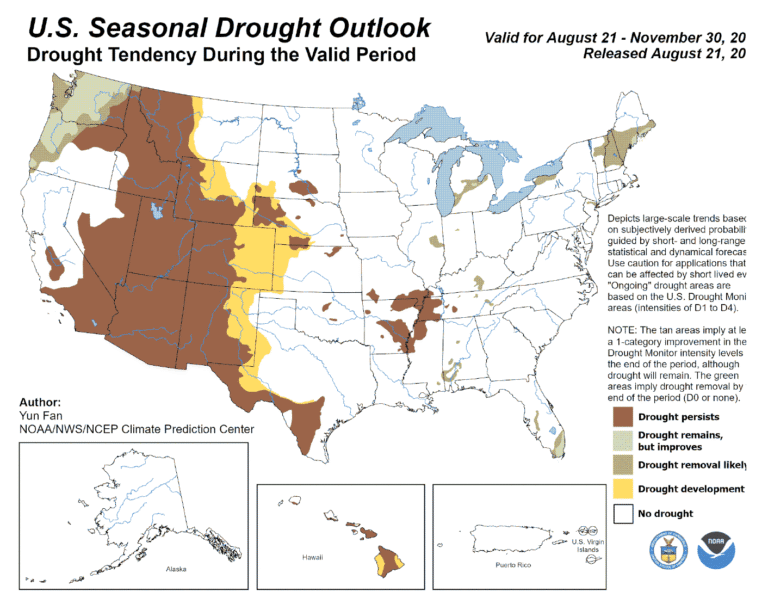
Additionally, hydrologic signals are mixed across the West, with California’s 154 primary intrastate reservoirs containing 25.9 million acre-feet of water (123% of the historic average for this time of year) as 2026 began. Meanwhile, storage in the sprawling multistate Colorado River Basin stood at just under 17.3 million acre-feet (53% of average), reflecting long-term issues including chronically elevated temperatures and a multi-decadal Southwestern drought. Farther east, a serious winter drought has engulfed much of the southern U.S., leading to poor pasture conditions and a reduction in surface water availability from streams and ponds.
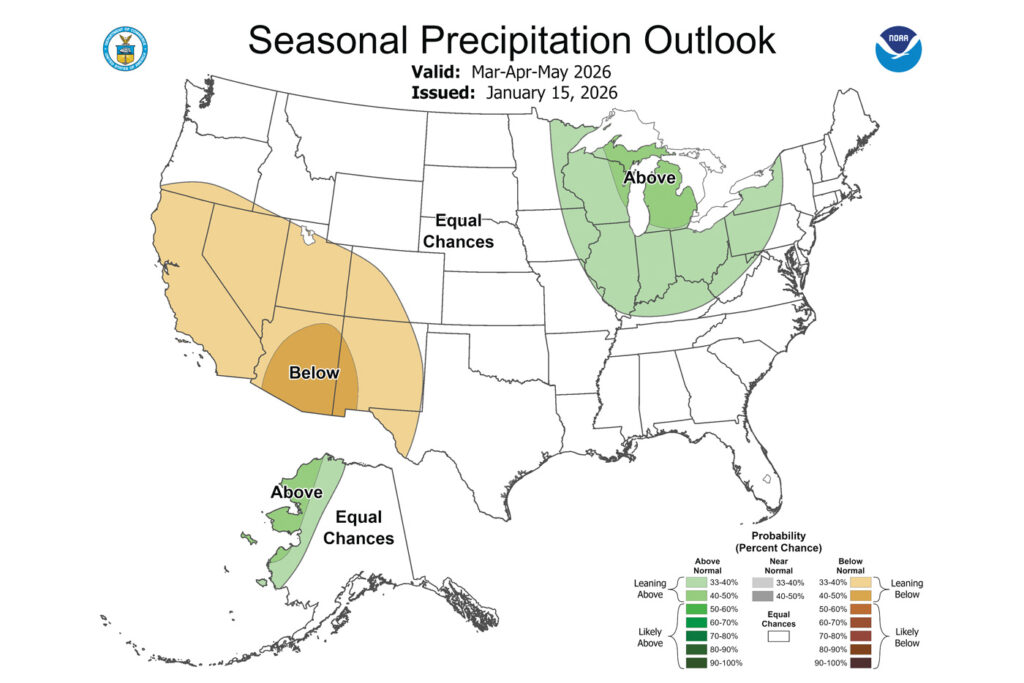
Nationally, drought has affected more than 40% of the landscape each week since mid-September 2025, reflecting one of the effects of La Niña conditions that developed last autumn. Looking ahead to the rest of spring, La Niña is expected to fade away, with waning influence on North American weather patterns. Still, lingering spring effects in the U.S. related to La Niña may include dryness in the Southwest and wet weather in parts of the Midwest.