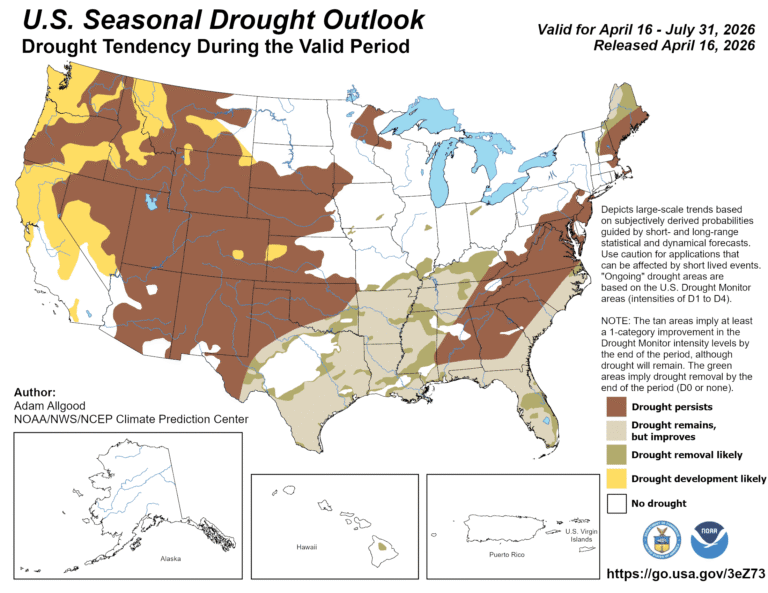
Despite recent California headlines of flash flooding, debris flows and small dam failures, cool-season storminess has been instrumental in reducing Western drought coverage and intensity. By early January, drought was affecting 62% of the 11-state Western region, the lowest regional coverage since July 2020 according to the U.S. Drought Monitor. Some benefits from the Western wetness are immediate. Still, others, such as rangeland recovery and a storage boost in large reservoirs, will have to wait until spring, when warmer weather will contribute to landscape greening and snowpack melting.
Nationally, drought coverage dipped to 46% by early January, down from an autumn 2022 peak of 63%. However, portions of the Plains remain mired in a protracted drought, with major impacts on rangeland, pastures and fall-sown crops including winter wheat. At the end of December 2022, extreme to exceptional drought (D3 to D4) covered more than half of Kansas and Oklahoma, with several locations in both states having completed their driest calendar year on record.
According to the U.S. Department of Agriculture, one-quarter to one-half of the winter wheat was rated in very poor to poor condition at the end of December in Kansas (49%), Nebraska (36%) and Oklahoma (27%). Across the southern half of the Great Plains, drought’s impact on winter wheat was aggravated by a severe December cold wave, which in many areas occurred without the benefit of a protective snow cover.
Looking ahead to spring 2023, there is hope that a stormy weather pattern will continue to ease or eradicate drought in various parts of the country. The greatest likelihood for additional drought relief may occur in the Midwest and across the nation’s northern tier, although there is some uncertainty in the spring forecast due to not knowing if and when La Niña will end. If La Niña were to last into or through spring 2023, drought may continue to plague portions of the nation’s mid-section, especially across the central and southern Great Plains.
Brad Rippey is an agricultural meteorologist in the U.S. Department of Agriculture’s Office of the Chief Economist.