Agricultural irrigation conversations often center around on-farm infrastructure and the role it plays in supporting efficiency. But in the western United States, irrigation districts play a central role in ensuring water makes it to the on-farm systems.
Many of the 850 irrigation districts, which have more than 147,000 miles of canals and pipelines, were built a century ago. In Fresno, California, for example, the canals and piping were mostly built between 1870 and 1890 by the Fresno Canal & Irrigation Company. The Fresno Irrigation District was founded in 1920. Its nearly 700 miles of gravity-fed canals cover about 250,000 acres, making it one of the larger irrigation districts, and the canals still operate in much the same way they did when they were first built.
“In my first 20 years here, we focused on upgrading structurally, including replacing old pipelines, concrete lining, upgrading weirs to automated gates and controls that can be monitored and controlled at the office with telemetry,” says Bill Stretch, FID’s general manager. “The last 10 years we have shifted our focus to be compliant with new groundwater-management laws, which include building recharge basins, and so we spend a lot of time, energy and money on trying to capture more groundwater and keep it within our boundaries.”
In Dos Palos, California, Henry Miller Reclamation District No. 2131 has been delivering water to farmers since 1913. The 47,000-acre district in Central California is 80% unlined canals and minimum pipelines.
“We have been modernizing in the last 22 years to make the system more efficient for farmers so they have on-farm flexibility and so we can minimize water loss by spills and seepage,” says Alejandro Paolini, water conservation specialist at HMRD.
Aging irrigation infrastructure, shifting water demand, increasing pressure on limited water supplies and changing policies are reshaping how irrigation districts operate. Not only are upgrades and maintenance required to keep systems working, but modernization efforts must also address conservation initiatives made through policy changes and legislation.
“One of the things we don’t talk enough about is that groundwater is not able to recharge fast enough to keep up with demand, and we have reduced groundwater quality,” says Charles Burt, PhD, CID, CAIS, irrigation and drainage consultant. “It’s every bit as important to talk about that as it is the lifespan of a dam or reservoir behind the water. In California, we are having to idle about 1 million acres because of groundwater overdraft.”
One way the water scarcity is being addressed is through making deliveries from irrigation districts to farms more flexible. Adding on-farm irrigation and nutrient management to this enables farmers to produce more tonnage, at a better quality, per unit of water consumed. Growers, irrigation designers and water district managers increasingly agree that changes must be made, but funding gaps create challenges in repairing aging infrastructure and meeting new mandates. Here’s a look at the factors contributing to the pressures on off-farm irrigation infrastructure and the funding needed to close the gap.
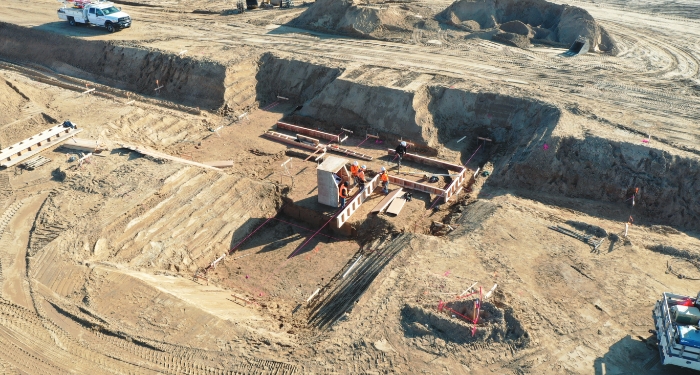
Not only is off-farm infrastructure old — much of it 100-plus years old — how water is used and regulated by legislation is affecting irrigation districts. There are five main changes driving infrastructure pressures.
1. More permanent, higher-value crop acreage
In California, producers have shifted toward more permanent crops such as nut and peach trees. “Trees need more water, which puts more pressure on water demand,” Paolini says. “Because more trees are planted every year, we don’t see a reduction in water demand, especially after the trees are 4 or 5 years old.”
2. Peak-season shifts
As permanent crop acreage increases, water demand shifts. FID Assistant General Manager Adam Claes explains that the district’s water demand used to look like a bell curve with two or three peak months, but today, “With cropping changes, more water is needed throughout the year, and at the same time, year-round deliveries to municipal treatment plants are the norm.” Longer irrigation seasons have also shortened maintenance windows, making repairs and construction projects for modernization more complicated.
3. Water delivery schedules
Over time, producers’ expectations have changed. Burt explains that when he started his career, nearly all water was delivered to farmers on a rotation schedule, and gates controlled who received water on which days. Today, all users are taking water at the same time (at lower field flow rates), and there is constant changing of flow rates, which is straining the infrastructure. “The water delivery service needed today is totally different than 50 and 100 years ago,” Burt says. “Not only do you have to replace these structures, but you have to make them so that they can provide the farmers with more flexible and equitable water delivery service.”
4. Sustainability and conservation legislation
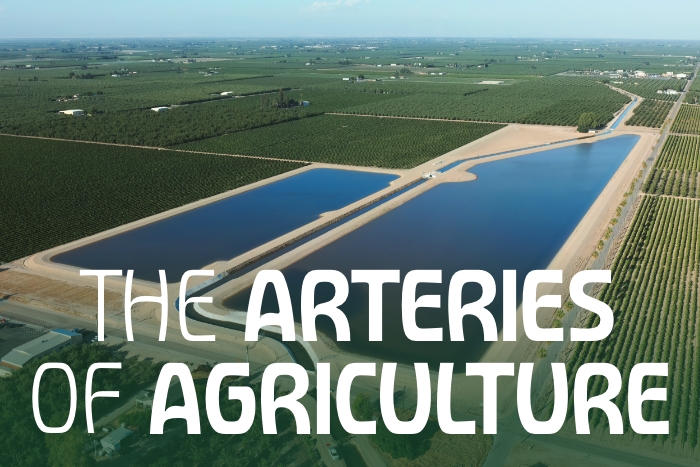
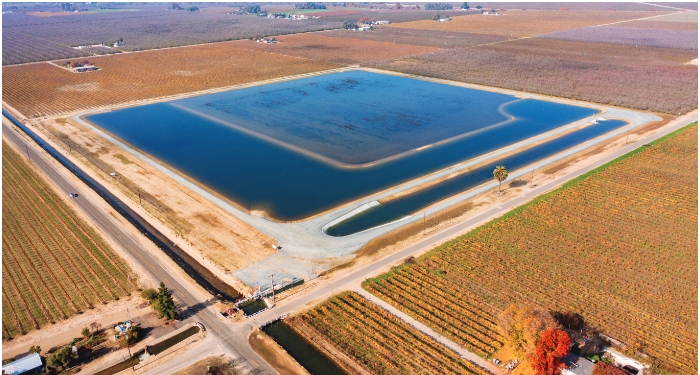
Policy mandates like California’s Sustainable Groundwater Management Act and others have reshaped how districts must manage groundwater. “When SGMA occurred, we had to shift our focus to be compliant with the new groundwater management law,” Stretch says. “We’re spending a lot of time, energy and money trying to capture more water to keep it within our boundaries to keep our groundwater levels from dropping.” To do that, FID has invested heavily in groundwater recharge infrastructure. The district has built about 40 basins districtwide, equal to about 1,000 acres, and there are plans to build out 300 to 400 more acres of basins.
Layered on top of SGMA are regulatory expectations that require physical upgrades including volumetric measurement at turnout gates. “In 2009, California came out with the Water Conservation Act, SB X7-7, that required that we volumetrically measure and charge at the turnout gate,” Stretch says. “For districts that hadn’t built that into their long term plans, all of a sudden they need to refocus their efforts and their dollars to comply.” Compliance is often required without additional funding, creating a gap for irrigation districts that need to balance the costs of meeting regulations while addressing challenges associated with old and dated infrastructure.
5. On-farm irrigation infrastructure changes
Differences in on-farm irrigation practices have an impact on off-farm water infrastructure. “When I started my career, California was 70% surface irrigation, and now it’s at least 70% pressurized,” Burt says. “It has completely flipped.” Lower-volume, longer-duration irrigation schedules don’t align with delivery systems that were built to move large volumes of water during scheduled rotations.
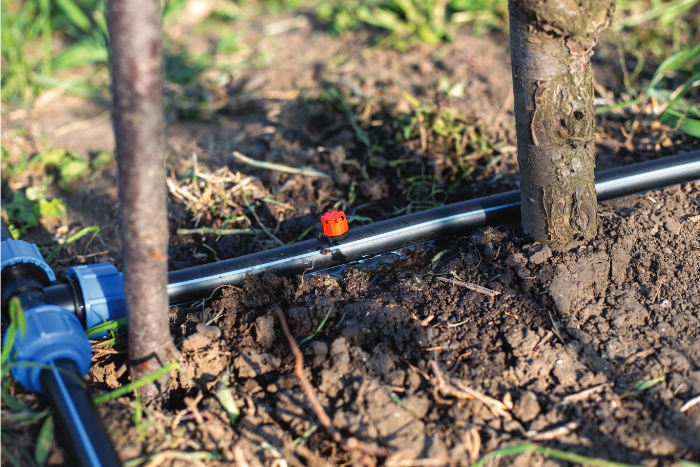
“As farmers have converted from flood irrigation to micro-irrigation, whether that’s drip or micro sprinklers, it has added pressure to our infrastructure,” Stretch says. “Instead of taking large slugs of water in shorter durations, now they want smaller flow rates but more frequently, and our old water delivery systems are not set up for that.” Recognizing that micro-irrigation will continue to increase, the FID developed an agreement for growers who want micro systems. “The agreement outlines that we can meet their minimum needs, and even more than that at times, but we require them to put in a flow meter, and they need to communicate differently with us,” Stretch explained.
“One of the things we don’t talk enough about is that groundwater is not able to recharge fast enough to keep up with demand, and we have reduced groundwater quality.”
— Charles Burt, PhD, CID, CAIS, irrigation and drainage consultant
Across the western U.S. and around the world, agricultural irrigation depends on dams, canals, pipelines and groundwater basins that were largely designed for a different era. Water users and managers increasingly agree that there must be changes, but funding gaps create challenges.
One project Burt is consulting on requires $40 million to replace and update pumps, electrical and pump housing. On another project in Montana, renovations are projected at $45 million for just a small portion of the system.
“The Confederated Salish and Kootenai Tribes in the Flathead Montana area received a $1 billion water settlement a few years ago,” Burt says. “That doesn’t come close to addressing the needs of the water distribution plus fish protections throughout the irrigation project, which is only about 100,000 acres.”
Even with greater federal funding provided through U.S. Department of Agriculture Natural Resources Conservation Service grants in fiscal year 2026, there is not enough money to keep pace. Irrigation districts largely rely on user fees, but Stretch notes that nobody wants to pay higher fees even though they are needed to improve water delivery. This makes grants an important but challenging funding source.
“Grants typically take a long time to plan because they often require environmental and cultural studies along with projected costs,” Paolini explains. “Many grant applications have short deadlines that make it difficult to get the information collected. When you do that work in advance and then have inflation, the price changes and your numbers are never up to date when you get the funds. We are grateful for grants, but they can be a headache.”
FID has become aggressive in pursuing state and federal grants and has received more than $33 million in the past five years. But the grants aren’t enough, and seeking them delays projects. “There isn’t enough money to fund our old/dated infrastructure and help construct the groundwater recharge basins,” Stretch says. “Those dollars come with delays. Grants once slowed projects by about six months; we now sometimes see delays up to two years.”
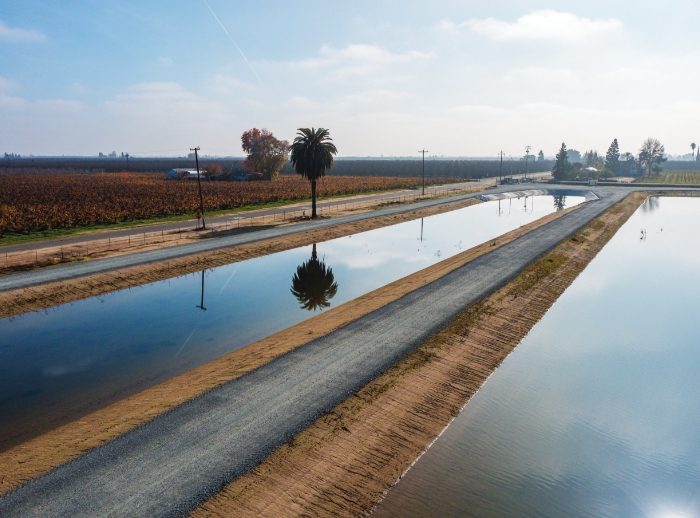
The pressure on century-old irrigation infrastructure will continue to increase as water demand, climate change, shifting weather patterns, technology advancements and policy changes affect how much water is available and when.
“Adding newer technology like flow meters throughout for better water-management control provides better service to our customers and is more equitable and also allows the district to better manage our supplies,” says Claes. “But that is just one part of modernizing an old irrigation district.”
Burt agrees, adding, “The whole water delivery system has to be able to accommodate the on-farm irrigation and do it efficiently. That takes investment, meetings between farmers and irrigation districts, and in some cases legislation. It is all one big picture.”