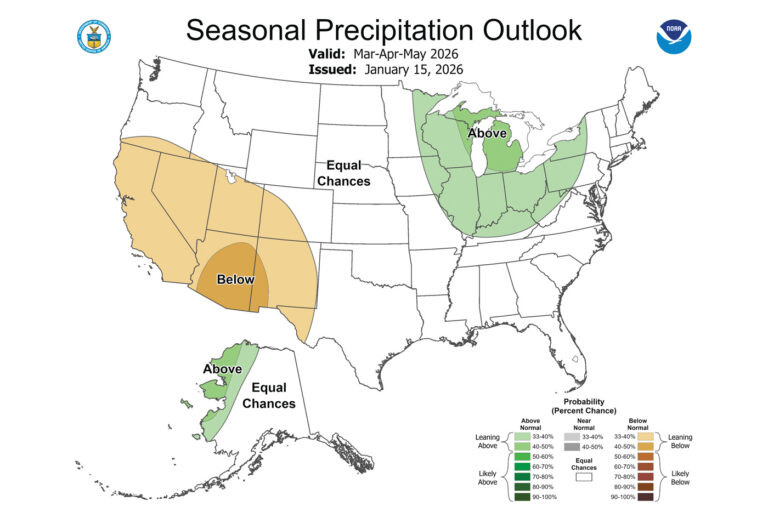
In February, the combination of La Niña and a disrupted polar vortex helped to drive Arctic air and wintry weather deep into the southern United States, following an unusually mild November-January period. While the disruption was temporary, impacts on cattle operations, winter wheat and other agricultural interests across the nation’s mid-section were severe. During the spring of 2021, weather patterns more typically associated with La Niña are expected to return. According to the National Weather Service, March-May 2021 should feature temperatures averaging above normal across large sections of the country, although periodic cold outbreaks may still occur.
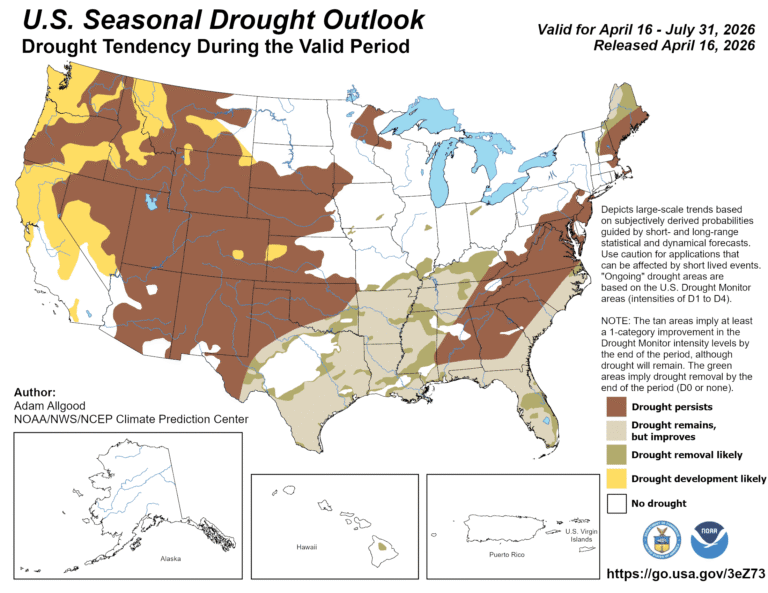
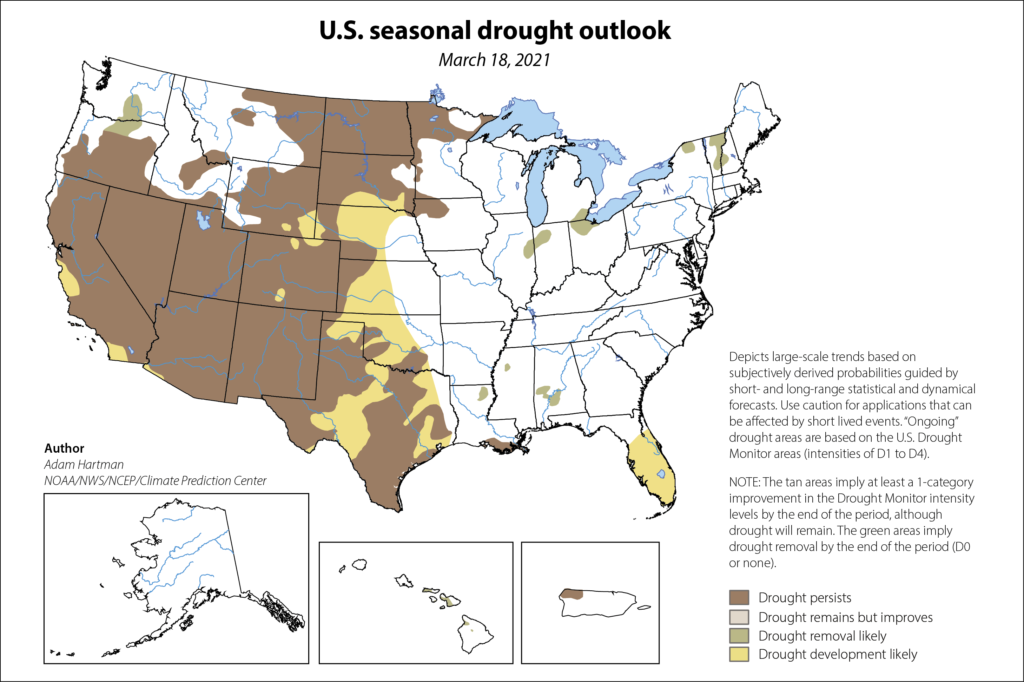
The NWS spring forecast portends worsening drought as the warm season arrives across the southern Great Plains and the Southwest. Snowpack is already below average across much of the Southwest; if the winter wet season ends with a whimper, as expected, worsening impacts could include below-average spring runoff and reservoir recharge, as well as reduced summer irrigation supplies. On the central and southern Great Plains, a dry spring could further harm winter wheat already stressed by drought and the February cold wave. Farther north, however, spring and summer water supply and irrigation prospects are generally favorable from the Pacific Northwest to the northern Rockies. Elsewhere, there is the potential that a stormy spring could lead to planting delays and possible flooding in the Ohio Valley and environs.