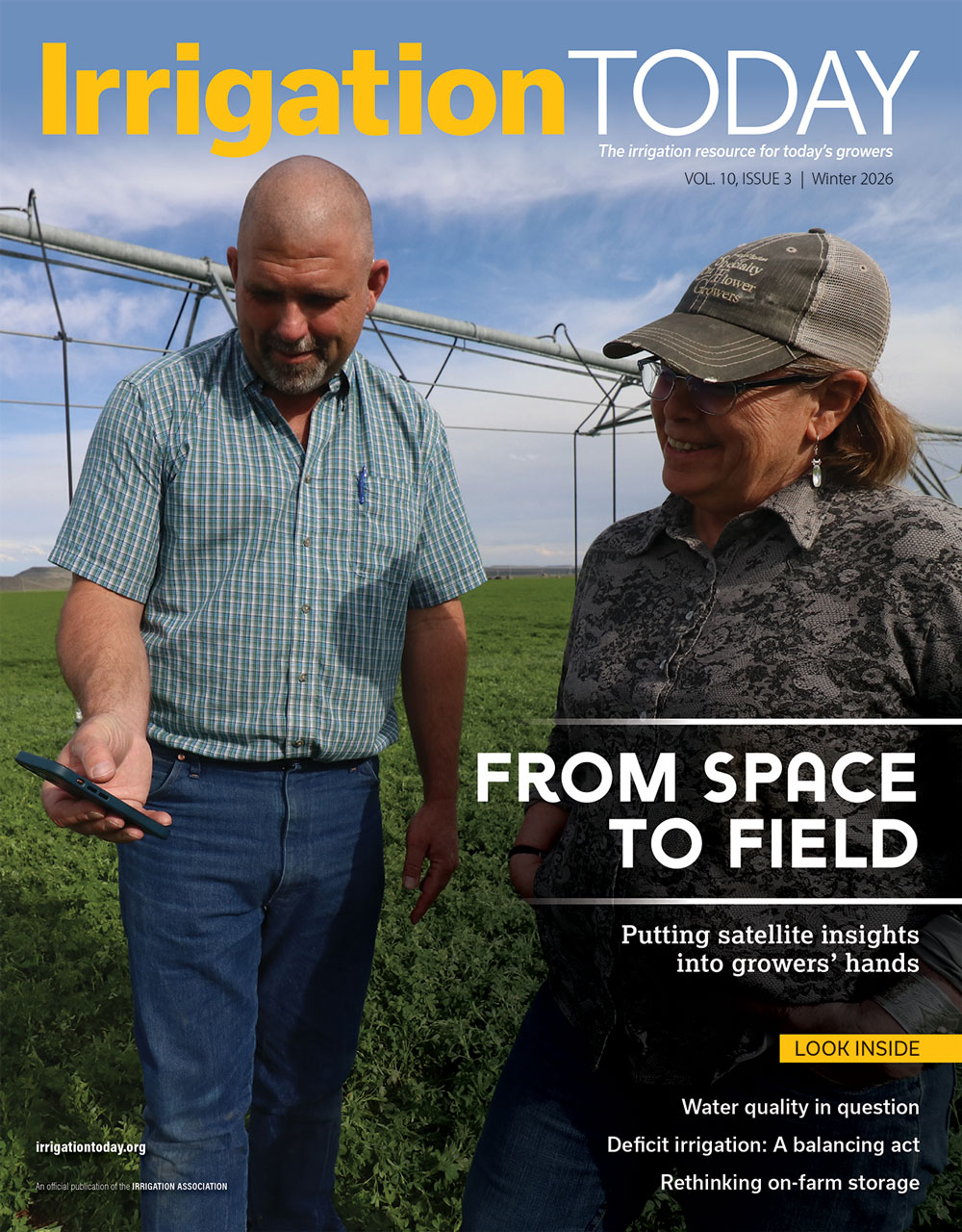
While scientists have been working on satellite-based approaches for mapping evapotranspiration (ET) for more than 30 years, the data have historically been difficult for agricultural producers and irrigation professionals to access, notes Forrest Melton, senior research scientist in the earth sciences division at NASA’s Ames Research Center in California.
Practical strategies for growers and irrigation professionals facing water scarcity, regulatory pressures, and rising costs—delivered through innovation and collaboration.
With government funding restored through September, the irrigation industry looks ahead to potential farm relief, conservation funding, and advocacy priorities for 2026.
Managing irrigation water quality starts with testing and understanding salt content, then tailoring strategies to water source, irrigation method, and crop needs.
Deficit irrigation can improve crop quality and conserve water, but requires precise timing, monitoring, and crop-specific knowledge to avoid yield loss.
On-farm reservoirs balance water delivery, improve system efficiency, and capture tailwater—but require strategic design, maintenance, and cost-benefit analysis.