it-icon

Water

RootedinResilience_Summer2025
Feature
Healthy soils with strong aggregates and higher organic matter can hold 5,300 more gallons of water per acre, improving irrigation efficiency.
RevFarmWaterMgmnt_Summer2025
Feature
Smart irrigation technologies enable farmers to reduce water usage by 20% while maintaining yields through AI, remote monitoring, and precision control systems.
Smart Irrigation Month
Whether you’re working in agriculture, landscape, manufacturing or distribution, you can be part of Smart Irrigation Month.
AdobeStock_278827944_Editorial_Use_Only
Google announced a $4 million investment in two large-scale water replenishment projects in North and South Carolina aimed at improving watershed health and agricultural water...
AdobeStock_84826080
New research from Kansas State University suggests that a simple adjustment to center pivot irrigation systems—slowing down the speed—can significantly improve water use efficiency and...
AdobeStock_283637625
State and federal partners have committed $45 million to expand surface water delivery in the Columbia Basin.
Spr25_inefficient-irrigation
Feature
Poor distribution uniformity in irrigation systems leads to environmental challenges including soil degradation, water pollution, and greenhouse gas emissions, requiring proactive strategies to improve efficiency.
Natasha
Feature
At the California Irrigation Institute conference, Irrigation Association CEO Natasha Rankin highlights the importance of public education, regional policy approaches, and cross-industry collaboration to advance...
Spr25_weather
Feature
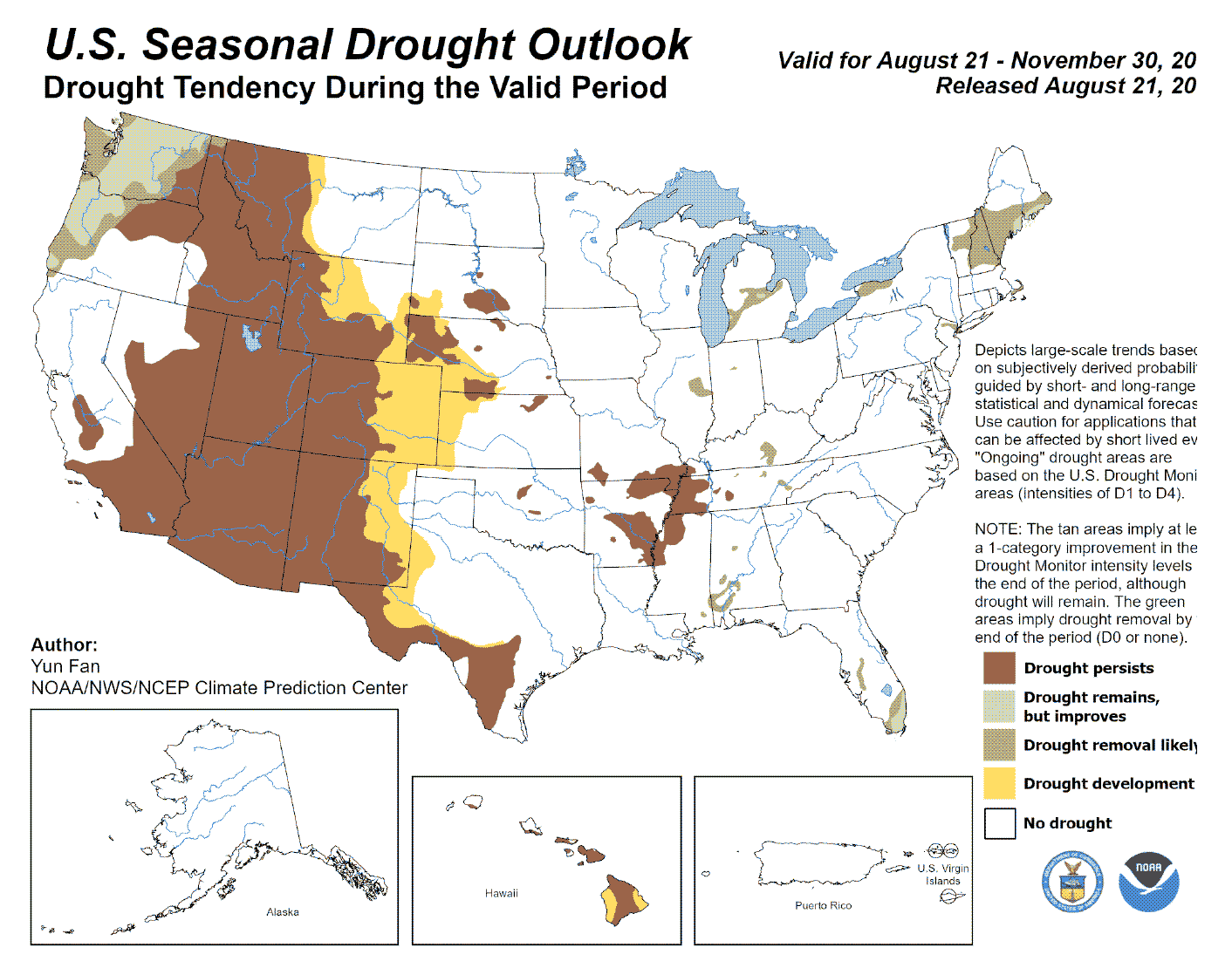
Despite a La Niña-esque weather pattern, U.S. drought coverage fell to 38% by late 2024, with improvements in the Northwest and Plains, though persistent dryness...
Spr25_water-scarcity
Feature
Kansas farmers tackle water scarcity through community collaboration, innovative policies, and technology adoption, demonstrating that efficient irrigation practices can maintain profitability while conserving crucial water...